3 min readPuneJul 15, 2026 10:32 PM IST
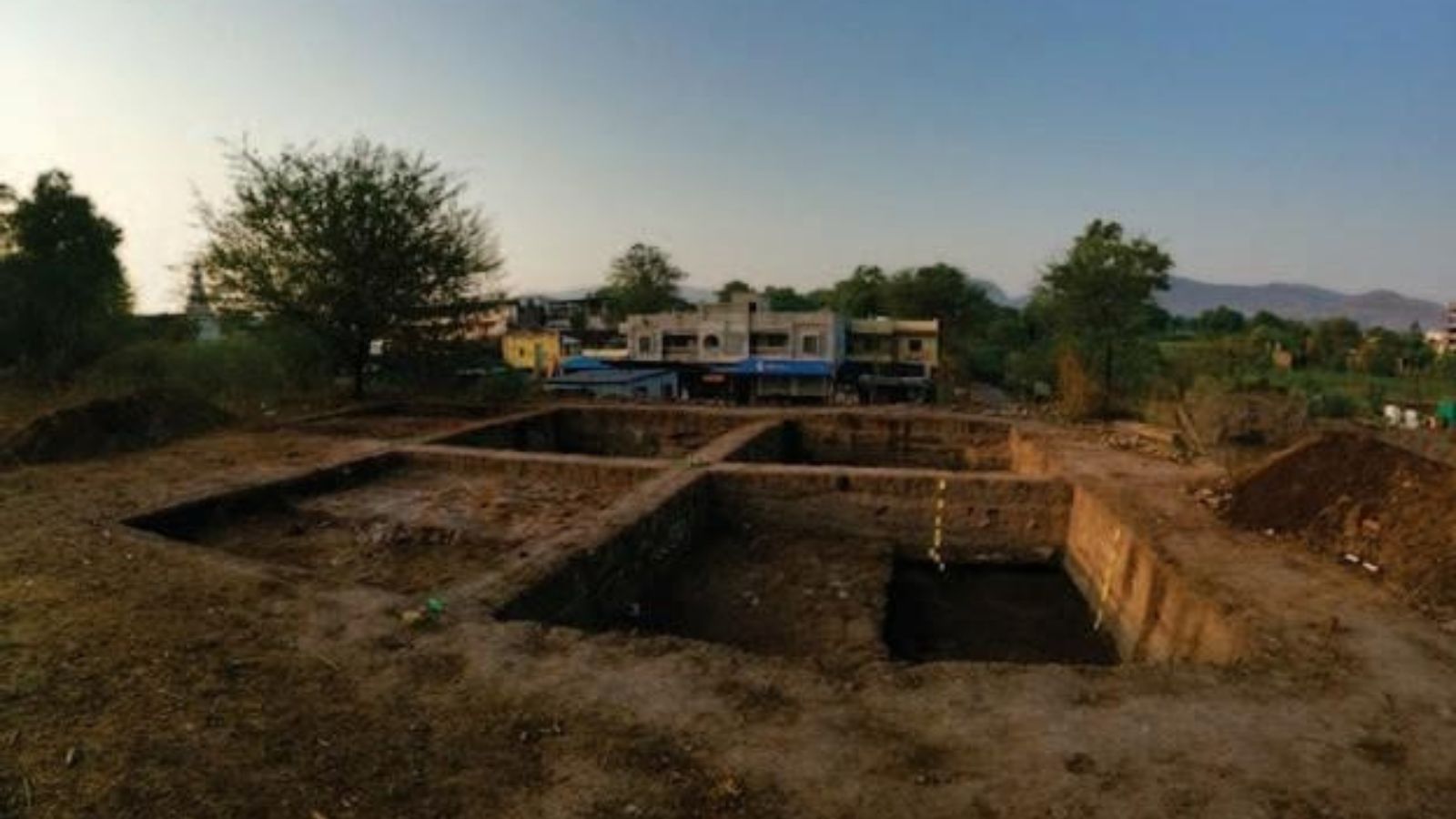
Findings of preliminary archaeological excavations at flood-prone Kotul site in Maharashtra’s Ahmednagar district suggest it was an important trade route during the Satavahana period (first century BCE to third century CE). The Satavahana period was a golden age for the Deccan plateau and its rulers used the western coast ports to export cotton and spices.
Kotul was an important settlement in the Mula Basin during the Satavahana period. According to Dr P D Sabale, Professor in Geoarchaeology and Controller of Examination at Deccan College, the site is significant as it connects two major trade centres such as Junnar and Nashik.

The preliminary archaeological excavations carried out by Deccan College Post Graduate Research Institute, Pune, was published in the college’s bulletin recently.
Located on a stable foothill plain of Kalsubai—the highest peak of the Sahyadri mountain range—and on the right bank of upper Mula River, Kotul is at the junction of Ahmednagar-Nasik-Thane and Pune district boundary. The site is approximately one km in length and half km in width. The present village occupies 60 percent of the site while 40 percent of the area is used for agricultural activities.
“The site is of importance as it is located on the trade route of Satavahana period connecting the two major trade centres of Junnar and Nashik,” Dr P D Sabale, Professor in Geoarchaeology and Controller of Examination at Deccan College, said.
As part of doctoral study, Abhilasha Mishra under the guidance of Dr Sabale carried out a village to village geoarchaeological exploration for the whole Mula River. “The main aim of the excavation was to understand the cultural development of the site, study its role in ancient trade and reconstruct the history of the region,” Dr Sabale added.
Areca nut shape beads, terracotta ball and bangle unearthed in trenches
The excavation uncovered remains of residential structures mostly belonging to the medieval times. Pottery like red ware and drab black ware were also found. Besides, areca nut shape beads, broken fingers of human figurines, well-finished terracotta beads, terracotta ball and bangles were found. A metal coin too was found. The excavation also yielded skeletal elements of animals.
Story continues below this ad
Ancient settlers ate green/yellow millets, protein-rich pulses
The excavation also threw light on the agricultural economy of the ancient settlers. For instance, the ancient settlers at Kotul subsisted on starch-rich cereal like rice; green / yellow/ foxtail millet, sawa millet and protein-rich pulses such as black gram, green gram, field pea and horse-gram. Besides, seeds of Indian jujube were also recovered from the site.
Digital conservation of Kotul site
Unmanned Aerial Vehicles (UAVs) equipped with high-resolution cameras and GPS sensors were used for aerial photography and data acquisition. A high-resolution 3-D model of the site was carried out, which plays a pivotal role in preserving and understanding its historical and cultural heritage, Dr Sabale said.