Home Blog Page 10

What is really happening in northern Nigeria | Armed Groups

0
What is really happening in northern Nigeria | Armed Groups

In recent months, the frequency and intensity of attacks in northern Nigeria have shattered the comforting illusion that the region’s long insurgency has receded into the background of national life. As violent incidents have proliferated, many Nigerians have refused to confront this uncomfortable reality and have opted instead to embrace conspiracy theories suggesting that the resurgence is somehow tied to renewed American involvement in Nigeria’s  counterterrorism efforts.

It is not difficult to see why the theory of foreign collusion with terrorist groups resonates in Nigeria. In February 2025, United States Congressman Scott Perry claimed that the US Agency for International Development (USAID) had funded Boko Haram, but offered no evidence for the allegation. Richard Mills, then the US ambassador to Nigeria, rejected Perry’s statement, but by then the claim had already acquired a life of its own in the public space and on social media.

Then, American officials like Congressmen Ted Cruz and Chris Smith made statements that fuelled the “Christian genocide” narrative, which falsely claims that the killings in Nigeria exclusively target Christians.

Attacks on Christians have happened, including most recently on a church in Kaduna state on Easter Sunday, but Muslim communities have also been regularly targeted. The truth is that terrorist groups have long operated indiscriminately.

What this moment demands, therefore, is to go beyond the seduction of easy explanation, and embark on serious analysis of what is really happening in northern Nigeria.

That diagnosis must begin with clarity about what the attacks reveal. First, they reveal that the insurgency has adapted in both form and method. Second, northern Nigeria’s insecurity can no longer be understood in isolation from the rest of the region; it is part of the wider regional disorder across the Lake Chad basin and the Sahel. And third, the violence continues to feed on deeper domestic vulnerabilities that extend far beyond the battlefield: chronic poverty, educational exclusion, weak local governance, and the long erosion of the social contract in parts of the North.

Let us begin with the first point. Recent attacks demonstrate that the insurgent ecosystem has learned, adapted, and expanded beyond the old image of a crudely armed rebellion fighting in predictable ways. The ISIL affiliate in West Africa Province (ISWAP), in particular, has become more adaptive in structure and tactics, while its conflict with Boko Haram has weakened the latter and left ISWAP as the more organised and deeply entrenched threat in the Lake Chad region. It has consolidated its presence in parts of the Lake Chad basin and expanded into Sambisa Forest, widening the space from which it can threaten civilians and military formations alike.

This matters because insurgencies are sustained not by ideology alone, but by terrain, supply routes, local economies, and the ability to move men and materiel through spaces where the state is weak or absent. In that sense, the insurgency is no longer merely surviving in familiar hideouts; it is entrenching itself in a broader and more fluid battlespace, with ISWAP’s control of trade in and around Lake Chad now a major pillar of its resilience.

ISWAP has also refined the way it fights, demonstrating a growing capacity for coordinated assaults, night raids, ambushes, and operations designed not merely to inflict casualties, but to isolate military positions and slow the movement of reinforcements. This challenge is magnified by the sheer scale of the theatre itself.

Borno, Yobe, and Adamawa states are each comparable in size to entire European countries: Borno is slightly larger than the Republic of Ireland; Yobe is roughly the size of Switzerland; and Adamawa is slightly larger than Belgium. Policing territories of that scale would test any state, all the more so when they border a fragile regional neighbourhood.

The terrain has also shaped the rhythm of the conflict, with the dry season, particularly the first quarter of the year, ushering in an intensification of attacks.

At the heart of this adaptation is the evolution of technology. What once seemed unthinkable in this theatre has now entered the insurgent repertoire. Drones, including commercially available models modified for combat, are now part of the operational environment. The significance of this shift is not merely technical; it is also psychological and strategic.

Beyond technology, the insurgency’s growing mobility has sharpened the threat further. Rapid assaults by motorcycle-mounted units demonstrate the extent to which insurgent violence now depends on speed, concentration, and dispersal. Fighters can assemble quickly, strike vulnerable locations, and disappear into difficult terrain before an effective response can take shape.

The advantage here lies not in holding territory in the conventional sense, but in imposing uncertainty, stretching the state’s defensive attentions, and proving that the insurgents can still choose where and when to shock the system.

Perhaps the most dangerous dimension of this adaptation is the infiltration of foreign fighters. Their significance lies not only in their numbers, but in what they bring with them: technical knowledge, battlefield experience, tactical imagination, and links to wider militant networks.

Their presence points to a deeper cross-fertilisation between local insurgency and global terrorist currents. More troubling still, they are now playing a more active role in the conflict, not only refining tactics and skills but also participating directly in combat.

That is why the regional dimension must be central to any serious analysis. The weakening of regional cooperation has come at the worst time, creating openings that insurgents are only too ready to exploit. A threat that has always been transnational becomes harder to confront when neighbouring states no longer act with sufficient cohesion.

Niger’s withdrawal from the Multinational Joint Task Force after the reaction of the Economic Community of West African States (ECOWAS) to the military coup there has sharpened that challenge and weakened the perimeter defences of the north-east theatre. The force, comprising troops from Nigeria, Niger, Cameroon, and Chad, with a smaller Beninese contingent at its headquarters in N’Djamena, was instrumental in earlier gains and remains vital for reinforcing positions, conducting operations in difficult terrain, denying insurgents safe havens, and intercepting the movement of foreign fighters.

Yet even regional analysis, necessary as it is, does not fully explain the problem. Insurgencies endure not only because they move across borders, but because they can recruit, regroup, and exploit social weakness at home.

Violence in northern Nigeria is sustained by a combination of doctrinal extremism, chronic poverty, educational exclusion, and a state whose presence is often too limited to command confidence in the communities where armed groups seek recruits. The argument, therefore, cannot remain confined to the military sphere.

Poverty and lack of education do not directly produce terrorism, but they increase vulnerability, especially where alienation, weak institutions, and manipulative ideological narratives are already present. This is why the educational crisis in northern Nigeria should be seen not only as a developmental challenge, but as part of the wider security landscape. Education does more than impart literacy and numeracy; it provides structure, routine, and pathways to self-actualisation and social belonging.

It is important to note that the government is not without a response. In 2024, President Bola Ahmed Tinubu signed the Student Loans (Access to Higher Education) Act into law, and the rollout of the Nigerian Education Loan Fund has since opened a wider path to post-secondary education and skills development. But the more decisive educational challenge lies earlier, at the basic level, where literacy begins, habits are formed, and attachment to institutions is either built or lost. By the time a young person reaches the threshold of higher education, the foundational work has already been done or neglected.

This is why local governance matters more to security than is often recognised. In Nigeria’s federal structure, primary education sits closest to the weakest and most politically distorted tier of government. If local government remains fiscally weak, administratively paralysed, or politically captured, one of the country’s most important long-term defences against radicalisation will remain fragile.

That is why local government autonomy, though often framed in dry constitutional terms, has direct implications for security. President Tinubu, an ardent champion of local autonomy, welcomed the Supreme Court’s July 2024 judgement affirming the constitutional and financial rights of local governments and has pressed governors to respect it. Resistance, however, is unsurprising: many governors have long treated local governments as subordinate extensions of their authority.

So what does the present moment demand from Nigeria? It demands, certainly, continued military pressure on insurgent sanctuaries. It demands stronger force protection, sharper intelligence, surveillance and reconnaissance, improved rural and urban security, and a more serious approach to trans-border diplomacy. It demands that regional diplomacy be treated not as a luxury of peacetime statecraft, but as part of the operational infrastructure of security.

But the crisis cannot be addressed by military action alone. It also calls for social, institutional, and educational measures across all tiers of government. The state must confront extremism not only through force, but through education and functioning local institutions. It must rebuild governance, restore trust, and close the social and institutional fractures through which violence renews itself.

The views expressed in this article are the author’s own and do not necessarily reflect Al Jazeera’s editorial stance.

GT vs MI, IPL 2026: Narendra Modi Stadium Pitch Report and Ahmedabad Weather Forecast

0
GT vs MI, IPL 2026: Narendra Modi Stadium Pitch Report and Ahmedabad Weather Forecast

GT vs MI, IPL 2026: Narendra Modi Stadium Pitch Report and Ahmedabad Weather Forecast

The Gujarat Titans (GT) are set to face the Mumbai Indians (MI) in Match 30 of IPL 2026 at the Narendra Modi Stadium tonight, April 20. This is a mid-season clash defined by contrasting forms. GT enter the game on a three-match winning streak, sitting comfortably in the top half of the table. In contrast, MI are struggling in the bottom half with only one win from five matches.

Rohit Sharma is likely to miss out due to a hamstring injury, leaving MI’s opening duties to the South African duo of Quinton de Kock and Ryan Rickelton.

Shubman Gill has been in sensational form, while Hardik Pandya returns to his former home ground under significant pressure to reverse his team’s fortunes.

Narendra Modi Stadium Pitch Report

The surface at the Narendra Modi Stadium is expected to be a high-scoring “belter”, consistent with the 195-run average first-innings score seen here this season.

The track typically offers some early zip for pacers (like Kagiso Rabada and Mohammed Siraj) before settling into a batter’s paradise. Heavy dew is anticipated in the second half. This makes the ball difficult for bowlers to grip and significantly favors the team batting second. Captains are expected to win the toss and bowl first.

Also READ: Fans go wild Rinku Singh and Anukul Roy steer KKR to a nail-biting victory over Rajasthan Royals in IPL 2026

Ahmedabad Weather Forecast

The weather in Ahmedabad for the evening clash between GT and MI in IPL 2026 looks ideal for a full game of cricket, with clear skies expected throughout. The temperature is likely to hover around 31°C, creating warm but manageable conditions for both players and spectators. With absolutely no cloud cover and zero chance of precipitation, rain interruptions are highly unlikely, ensuring uninterrupted action at the venue.

Wind conditions are expected to remain gentle, blowing from the west-northwest at around 6 km/h, with occasional gusts reaching up to 22 km/h. This could offer slight assistance to swing bowlers early on, but overall, the breeze is not strong enough to significantly impact gameplay. The humidity level stands at a low 20%, which means the atmosphere will be relatively dry, reducing fatigue compared to more humid conditions often seen in coastal venues.

Another important factor is the dew point, which is recorded at 9°C—quite low for an evening game. This suggests that dew is unlikely to play a major role later in the match, meaning teams winning the toss may not feel compelled to chase purely due to dew concerns. Visibility is slightly reduced at 5 km, but it should still be sufficient for smooth gameplay without any major disruptions.

Overall, the conditions in Ahmedabad are perfectly set for a high-quality contest, with a dry pitch, minimal wind interference, and no weather threats, making it an exciting evening for cricket fans.

Also READ: Fans go gaga as Priyansh Arya and Cooper Connolly’s explosive knocks lead PBKS storm past LSG in IPL 2026

NSA Doval discusses bilateral relations, regional situation with Saudi leaders

0
NSA Doval discusses bilateral relations, regional situation with Saudi leaders

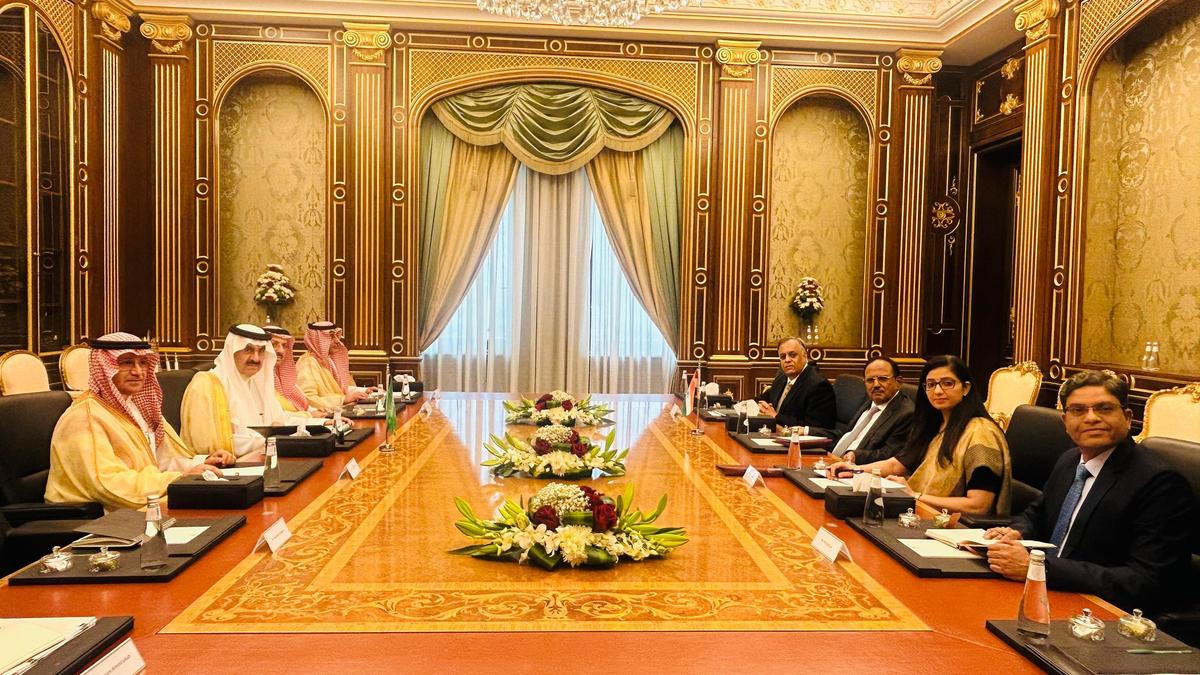
Mr. Doval held meetings with Saudi Foreign Minister Faisal bin Farhan, Energy Minister Abdulaziz bin Salman and National Security Advisor Musaed Al-Aiban. Photo: X@IndianEmbRiyadh

Mr. Doval held meetings with Saudi Foreign Minister Faisal bin Farhan, Energy Minister Abdulaziz bin Salman and National Security Advisor Musaed Al-Aiban. Photo: X@IndianEmbRiyadh

National Security Advisor Ajit Doval has met Saudi Arabia’s senior leaders and discussed the bilateral relations, the regional situation and other areas of mutual interests.

Mr. Doval, who reached Riyadh on Sunday (April 19, 2026), was received at the airport by India’s Ambassador Suhel Khan and Saudi Arabia’s Deputy Minister for Political Affairs Saud Al-Sati.

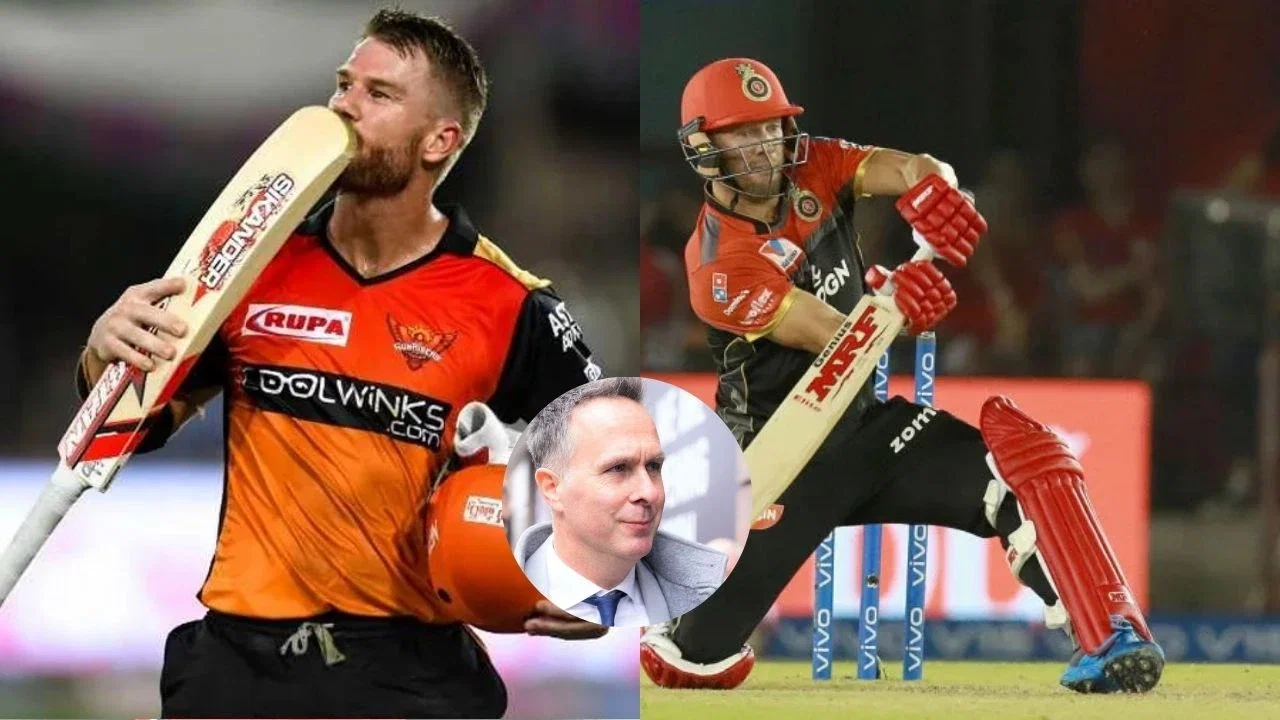
Michael Vaughan picks best overseas IPL player, ignores AB de Villiers, David Warner

0
Michael Vaughan picks best overseas IPL player, ignores AB de Villiers, David Warner

Former English batter Michael Vaughan took part in a ‘winner stays on’ round, where he was asked to pick the best overseas players who have played in the history of the IPL. The English legend had to make many tough choices, but ultimately picked one of the most supreme cricketers in the history of the IPL.

The IPL has featured many legends of World cricket, and overseas players have included some fierce strikers of the white ball. Michael Vaughan was asked to pick among the most legendary names in the IPL, and he made some startling choices.

Michael Vaughan backed an Australian legend in the IPL

The former English skipper has found a massive interest in cricket in India, as he has been in the nation since the ICC T20 World Cup and has continued his stay with the ongoing season of the IPL.

The round was started with Quinton de Kock, the veteran wicket-keeper batter from South Africa, whom Vaughan picked over the likes of Albie Morkel, Jacques Kallis, Shaun Marsh, and Trent Boult, before giving it away to his countryman Jos Buttler.

Jos Buttler remained his choice over the likes of legendary opening batters Brendon McCullum and Faf du Plessis, before he sided with the Australian great Michael Hussey, who played some wonderful cricket with the Chennai Super Kings and the Mumbai Indians.

However, he quickly changed his mind and moved to Shane Warne, the legendary Australian spinner who won the first title of IPL history with the Rajasthan Royals.

Also Read: GT vs MI Dream11 Prediction Today Match, Dream11 Team Today, Fantasy Cricket Tips, Playing XI, Pitch Report, Injury Update- IPL 2026, Match 30

Vaughan sidelines David Warner, picks 5-times winning CSK all-rounder in shocking comparison

Vaughan then let go of Shane Warne, the Aussie legend, for five-time champion all-rounder Dwayne Bravo, known as one of the most legendary bowlers in the IPL. He was the highest wicket-taker to date; he played in the IPL.

Siding with Bravo, Michael Vaughan made two shocking choices as he ignored the likes of AB de Villiers, also known as Mr. 360, and David Warner, the highest overseas run-getter in the IPL. He reasoned that Bravo would be picked for his all-rounder impact with both bat and ball.

Vaughan could only move away from Bravo when compared to his own former teammate Sunil Narine, who was further replaced by MI batting coach Kieron Pollard. According to Michael Vaughan, Pollard was a choice for his excellent ability on the field.

Chris Gayle becomes the ultimate winner of Vaughan’s best IPL cricketer

The race did not continue a lot as Michael Vaughan kept picking every new player brought into comparison. He moved from the 5-time champion Kieron Pollard to pick Rashid Khan, the legendary T20 spinner, as a greater talent in the history of the IPL.

Lastly, he picked Chris Gayle, crediting him as the universe boss as the greatest ever overseas cricketer in the history of the IPL. He further claimed that had his name been taken before, the round would not have turned out this long.

ALSO READ: “He’ll make it…”: RR coach confirms Vaibhav Sooryavanshi’s India debut date amid IPL 2026

नशे में धुत CISF जवान ने चुनावी सभा में घुसा दी बस, आसनसोल में बच्ची समेत तृणमूल के कई समर्थक घायल

0
नशे में धुत CISF जवान ने चुनावी सभा में घुसा दी बस, आसनसोल में बच्ची समेत तृणमूल के कई समर्थक घायल

नशे में धुत CISF जवान ने चुनावी सभा में घुसा दी बस, आसनसोल में बच्ची समेत तृणमूल के कई समर्थक घायल

Bengal Election: कोलकाता/आसनसोल. बंगाल से एक बड़ी खबर आ रही है. विधानसभा चुनाव प्रचार के तहत आयोजित तृणमूल कांग्रेस की एक सभा में एक अनियंत्रित बस के घुस आयी. बस की चपेट में आने से कई लोगों के घायल होने की सूचना है. कुछ एक लोगों की हालत गंभीर बतायी जा रही है. आसनसोल के रेलपार इलाके में हुई इस घटना से इलाके में भारी आक्रोश है. गुस्साए स्थानीय लोगों ने बस में तोड़फोड़ की और सड़क जाम कर विरोध प्रदर्शन शुरू कर दिया है. हालात को काबू में करने के लिए बड़ी संख्या में पुलिस और केंद्रीय बलों की तैनाती करनी पड़ी है.

नशे में धुत CISF जवान चला रहा था बस

जानकारी के अनुसार तृणमूल उम्मीदवार मलय घटक के समर्थन में आयोजित चुनावी कार्यक्रम के समाप्त होते ही एक बेकाबू बस अचानक भीड़ की ओर घुस आयी. बस के अचानक सभा में घुस आने से वहां अफरा-तफरी मच गई. बताया जा रहा है कि बस पर “पश्चिम बंगाल पुलिस” लिखा हुआ था. स्थानीय लोगों का आरोप है कि उस बस को एक CISF जवान चला रहा था, जो कथित तौर पर नशे में था. लोगों ने बस चालक को पकड़ लिया और पुलिस के हवाले कर दिया है. फिलहाल पुलिस पूरे मामले की जांच कर रही है. यह अभी स्पष्ट नहीं हो सका है कि यह हादसा महज लापरवाही का नतीजा था या इसके पीछे कोई साजिश है.

पश्चिम बंगाल की अन्य महत्वपूर्ण खबरों को पढ़ने के लिए यहां क्लिक करें

मौके पर पहुंचे मलय घटक

प्रत्यक्षदर्शियों के अनुसार, चालक ने बस पर से नियंत्रण खो दिया और सीधे कब्रिस्तान की दीवार तोड़ते हुए सड़क किनारे की दुकानों, ऑटो और टोटो को जोरदार टक्कर मार दी. इस हादसे में एक 7 साल की मासूम बच्ची समेत कुल 12 लोग चपेट में आ गए, जिनमें कई गंभीर रूप से घायल हैं. उनकी हालत नाजुक बनी हुई है. घायलों को तुरंत नजदीकी अस्पतालों में भर्ती कराया गया. घटना के बाद इलाके में भारी आक्रोश फैल गया. स्थिति कुछ समय के लिए तनावपूर्ण बनी रही, लेकिन अब नियंत्रण में बतायी जा रही है. मौके पर पहुंचे मलय घटक ने लोगों से शांति बनाए रखने की अपील की और घायलों के इलाज की व्यवस्था का भरोसा दिया.

Also Read: पश्चिम बंगाल के 16 जिलों में शराब की बिक्री पर प्रतिबंध, रात 9 बजे से बंद हो जायेगी बार

The post नशे में धुत CISF जवान ने चुनावी सभा में घुसा दी बस, आसनसोल में बच्ची समेत तृणमूल के कई समर्थक घायल appeared first on Prabhat Khabar.

6 family members drown in Cauvery river during Urus gathering in Mysuru

0
6 family members drown in Cauvery river during Urus gathering in Mysuru

2 min readBengaluruApr 20, 2026 10:24 AM IST

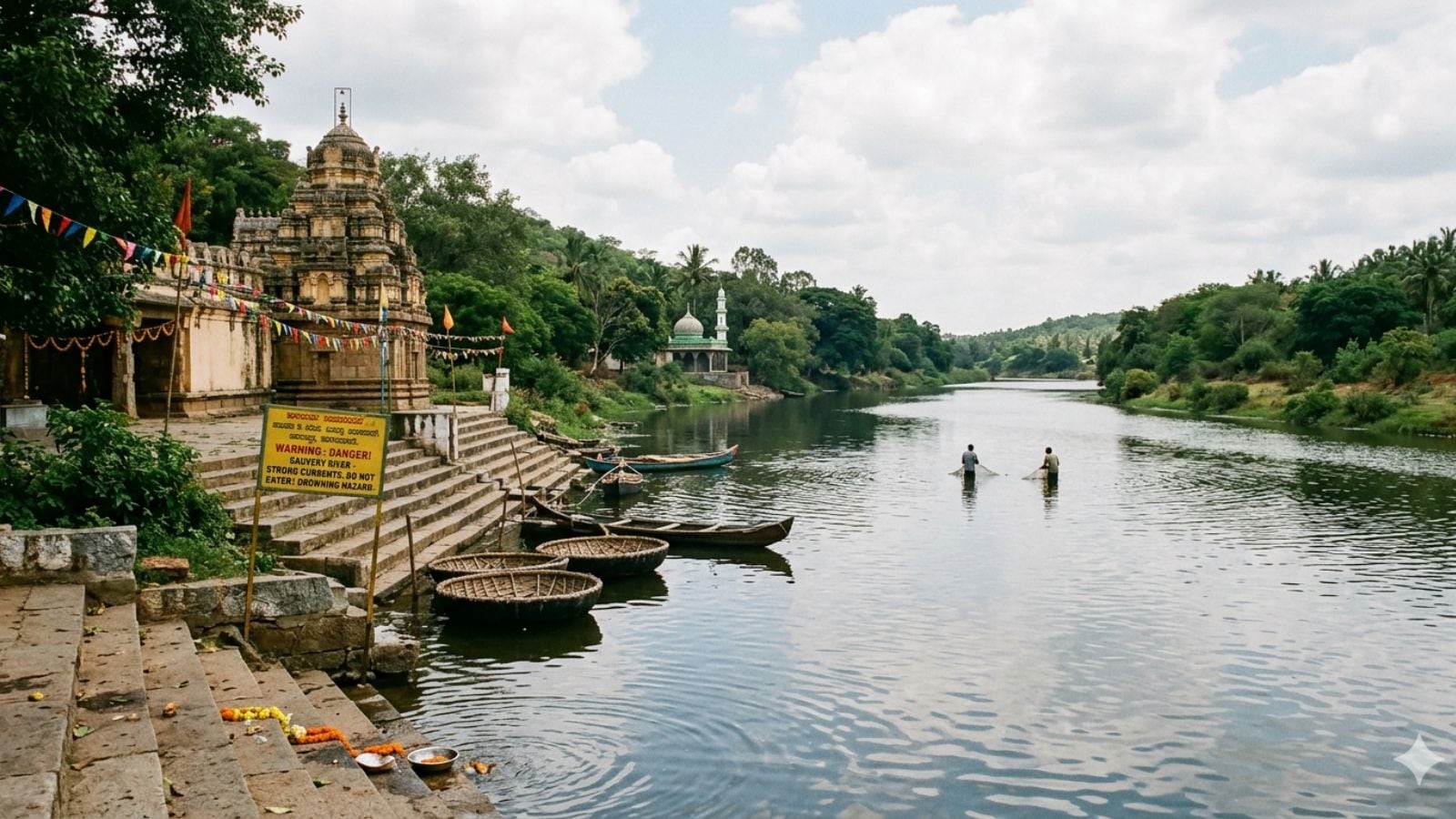
Six people of an extended family, including three children, drowned in the Cauvery river in Karnataka’s Mysuru district Sunday afternoon while attending an Urus event (death anniversary of a Sufi saint), said the police.

The incident happened near Arkeshwara Temple in K R Nagar taluk, Mysuru district. A police officer said the family of 20, including distant relatives, had gathered at Hazrat Khader Lingavali Dargah, located on the banks of the river in Hale Yedathore. One child slipped into the water around 3 pm, and others who rushed in to help were also swept away, the police said.

The deceased were identified as Fatima, 42, and Uzeir, 5, both from Udayagiri, Mysuru; newly-wed couple Mohammed Yasin, 23, and Neha Kausar, 19, from SBR Layout, Bengaluru; Emma Aiman, 13, from Kadugondanahalli, Bengaluru; and Afif Ahmed, 13, from Muslim Block, KR Nagar.

The local fishers rescued three members, who are currently receiving treatment. “The rescued are Salma Banu, a resident of KR Nagar; Asiya of Mysuru and Zubeda of Bannur,” the officer added.

Karnataka Chief Minister Siddaramaiah expressed grief over the incident on X and announced a compensation of Rs 5 lakh to the family of each victim.

https://x.com/siddaramaiah/status/2045854278963843523

“It is heartbreaking to learn that six people drowned in the Cauvery River while going for a swim near the Arkeswara Temple in K.R. Nagar, Mysuru. I pray to God that the departed souls attain eternal peace, and that the bereaved family members find the strength to bear the pain of their loss,” he said.

“With humanitarian concern that the lives grieving the loss of family members should not face further hardship from financial challenges, a compensation of 5 lakh rupees each will be provided to the families of the deceased. I wish that those who were rescued in the accident and are currently receiving treatment in the hospital recover swiftly and rejoin their loved ones as soon as possible,” Siddaramaiah added.

Story continues below this ad

Mysuru Superintendent of Police Mallikarjun Baladangi and K R Nagar police visited the site and launched an investigation into the circumstances surrounding the tragedy.

Rashid Khan almost played for Team India, turned down offer to join Kohli, Rohit

0
Rashid Khan almost played for Team India, turned down offer to join Kohli, Rohit

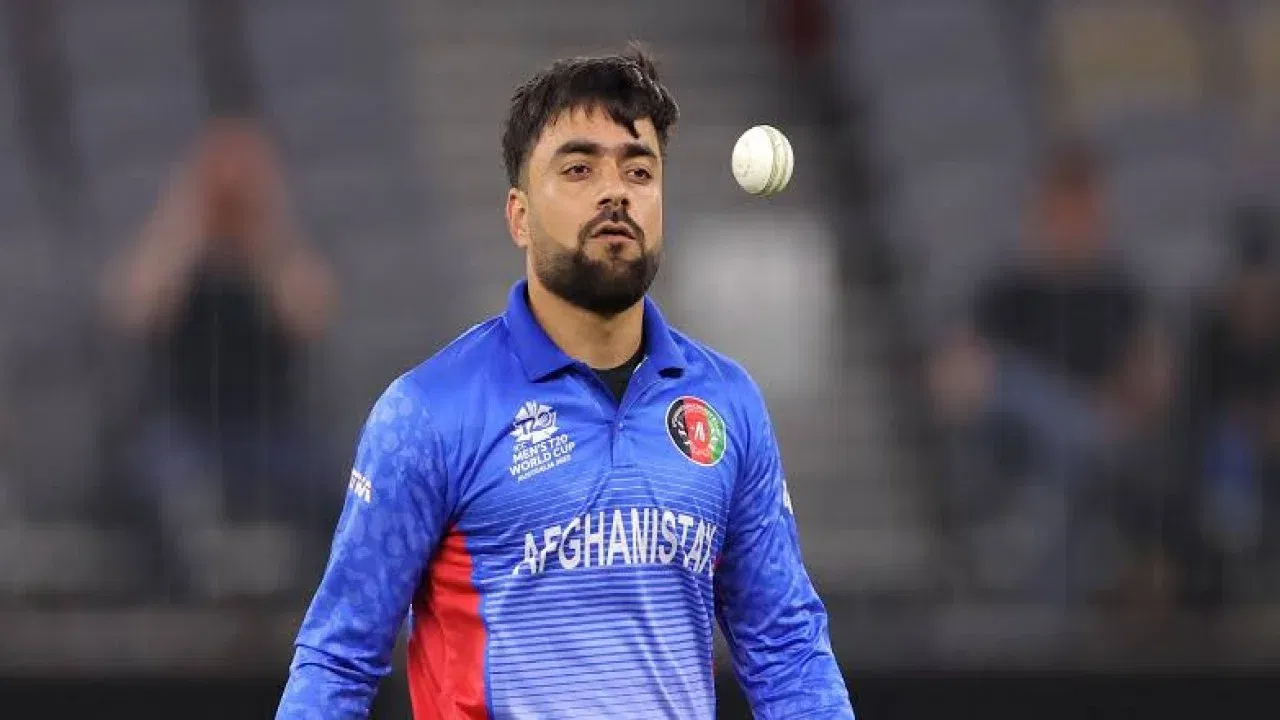
Rashid Khan has always been seen carrying Afghanistan on his shoulders with pride, but his revelation has now made his story even stronger and more emotional. Rashid Khan is currently in India representing the Gujarat Titans (GT) in the ongoing IPL 2026.

Amidst the IPL 2026, the Afghanistan spinner’s surprising revelation left everyone stunned. Rashid shared that he once received big offers from India and Australia. He was offered citizenship and the opportunity to play international cricket for them.

But Rashid Khan never compromised on his identity and his loyalty to Afghanistan, turning down both offers. The spin wizard made this revelation in his new book Rashid Khan: From Streets to Stardom, which talks about his life from a small town in Nangarhar to becoming one of the most famous and successful cricketing superstars in the world.

Rashid Khan’s shocking revelation amid IPL 2026

As reported by PTI, both India and Australia had shown interest in him at different times. These were serious offers, as Rashid was told about citizenship and a chance to play international cricket for these countries.

Read Also: Nicholas Pooran’s LSG axing all but confirmed! 3 batters who can replace him in playing XI

For any young cricketer, it was a dream offer, as he would get better facilities, big tournaments, and global recognition, but Rashid was mature enough to leave them disappointed.

Rashid made it very clear that if he cannot play for Afghanistan, he will not play for any other country either. He wanted to stay connected to the country where he was born and where his cricket journey began, despite all the challenges in the Taliban regime.

Rashid Khan wrote in his book, “I received such offers from both Australia and India. But I told them, ‘If I don’t play for my country, I won’t play for any other country either’.”

The India offer during IPL 2023

Rashid Khan Shubman Gill Gujarat Titans IPL 2025
Image Credits: X

One of the most detailed moments shared in the book is related to India during the 2023 IPL season. At that time, Rashid was already a big match-winner for the Gujarat Titans in the IPL. He was informed that a senior official wanted to meet him.

When he went for the meeting, the official spoke about the difficult situation in Afghanistan and suggested that he could stay in India, get Indian documents, and continue his cricket career there.

Rashid admitted that he was surprised and did not know how to react in that moment. It was a life-changing situation, but he kept his calm and politely thanked them and clearly said that he is playing for Afghanistan and wants to continue doing so.

The Afghan star added, “I went over and greeted him. We started talking, and he said, ‘The situation in your country is very bad. Come stay in India. We will give you Indian documents, live here, and play cricket here.’ I was surprised by what he was saying and didn’t know how to respond. But I smiled and said, ‘Thank you very much. I am playing for my country, Afghanistan.’”

Read Also: “He’ll make it…”: RR coach confirms Vaibhav Sooryavanshi’s India debut date amid IPL 2026

When Indian fans demanded citizenship for Rashid Khan in 2018

This was not the first time Rashid’s name was linked with India. Back in 2018, after his outstanding performances for the Sunrisers Hyderabad (SRH) in the IPL, fans in India became huge fans of him. His performances had created such a craze in India that fans on social media even demanded that he should be given Indian citizenship.

The buzz had reached such a level that even former minister of external affairs Sushma Swaraj responded by saying that citizenship matters were handled by the Ministry of Home Affairs. At the same time, the former Afghan president Ashraf Ghani also reacted, proudly calling Rashid a national treasure for Afghanistan.

ट्रेन में छिनतई करने गिरोह पकड़ाया:कोडरमा जीआरपी ने एक पुरुष सहित दो महिला चोर को पकड़ा, रेकी कर बनाते थे शिकार

0
ट्रेन में छिनतई करने गिरोह पकड़ाया:कोडरमा जीआरपी ने एक पुरुष सहित दो महिला चोर को पकड़ा, रेकी कर बनाते थे शिकार


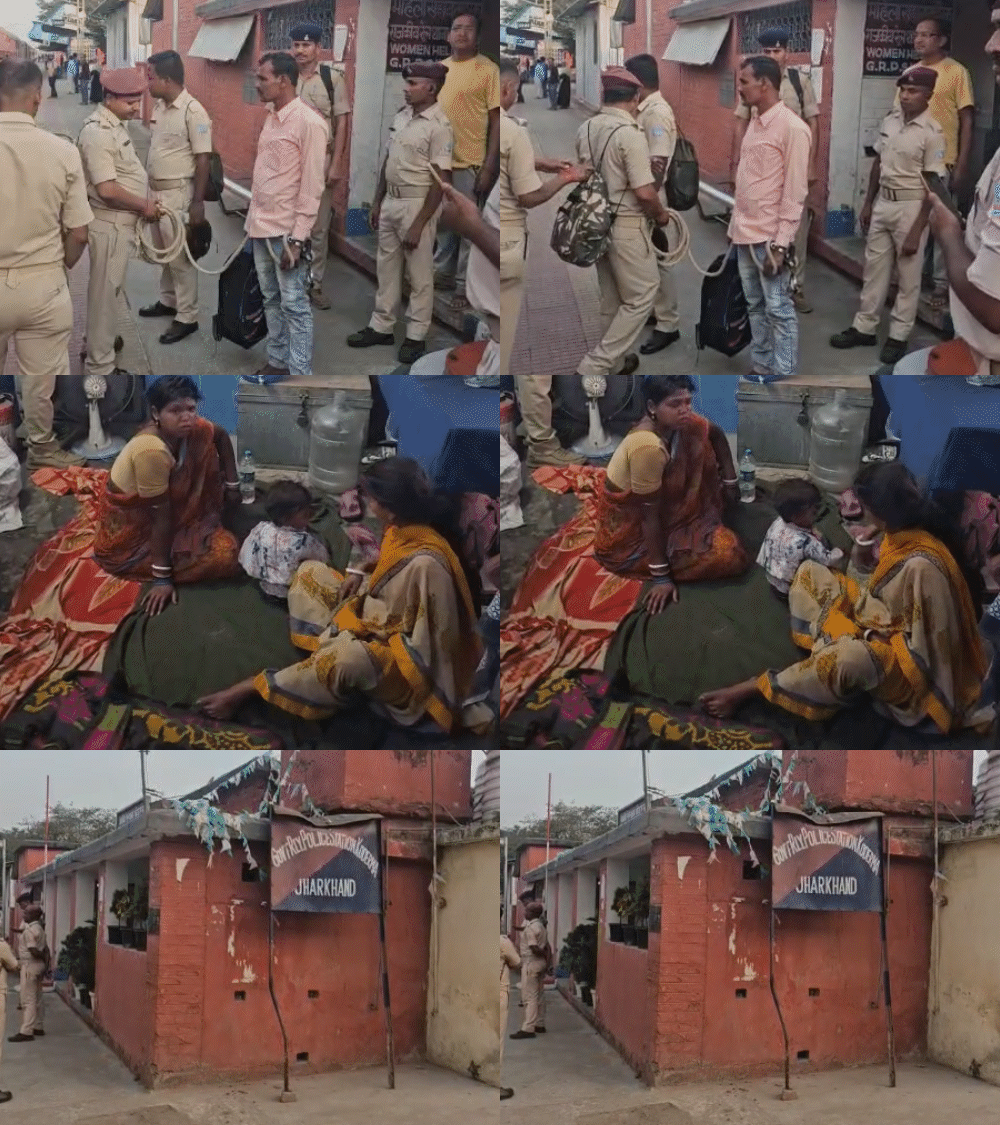
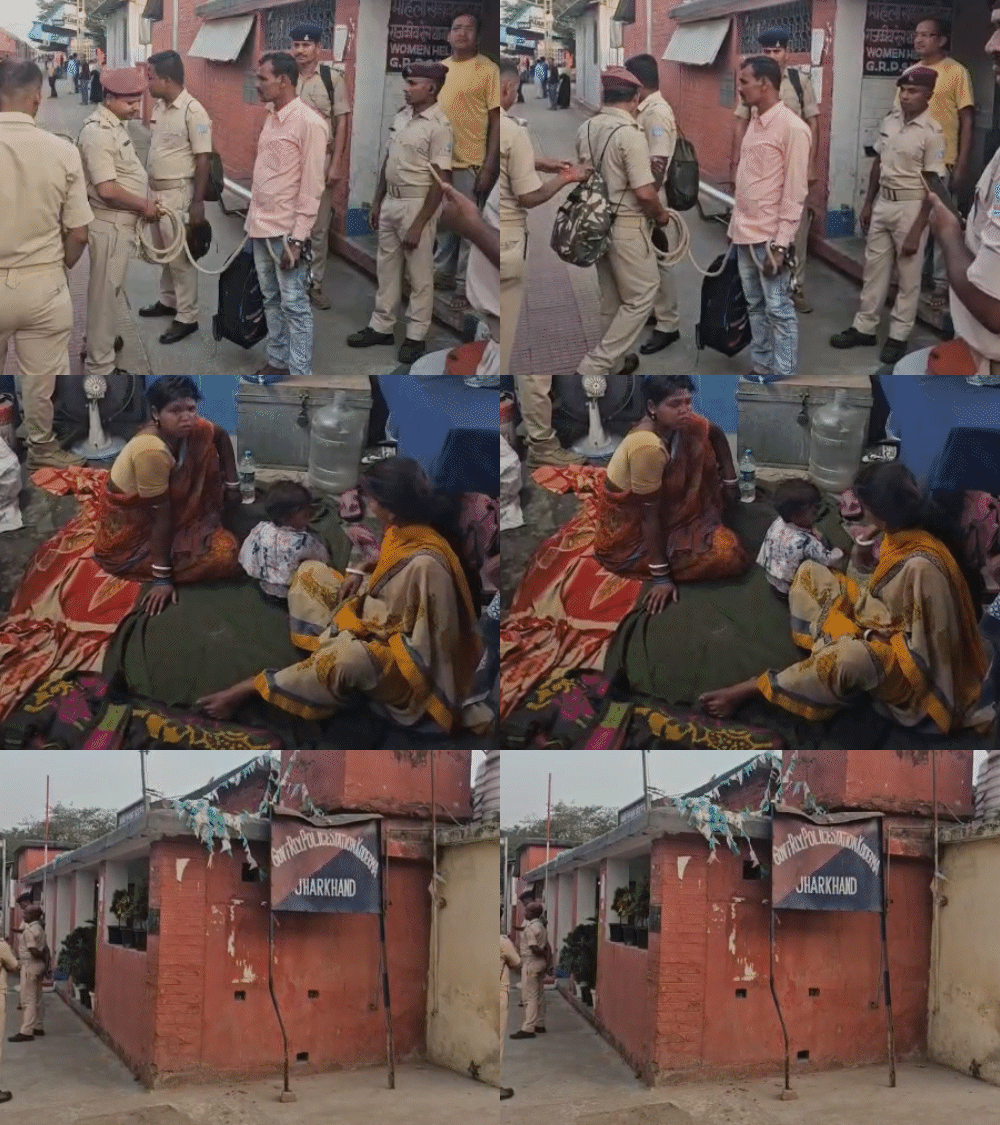
कोडरमा रेल पुलिस ने अंतरराज्यीय छिनतई गिरोह के एक सक्रिय सदस्य को गिरफ्तार किया है। गिरफ्तार आरोपी की पहचान पश्चिम बंगाल के मनोसाखली निवासी 46 वर्षीय आशीष प्रधान के रूप में हुई है। जिस मामले में अरेस्टिंग हुई है वह घटना रविवार की है। गया से आसनसोल जा रही पैसेंजर ट्रेन में चढ़ रही एक महिला के गले से चेन छीनने की कोशिश की गई। महिला और उसके पति द्वारा शोर मचाने पर मौके पर मौजूद जीआरपी जवानों ने तत्परता दिखाते हुए आशीष को पकड़ लिया। हालांकि उसका साथी मौके से चेन लेकर फरार हो गया। पूछताछ में आशीष ने बताया कि वह पहले बसंती में मिठाई की दुकान में हलवाई का काम करता था, लेकिन कम आमदनी के कारण उसने अपराध का रास्ता अपना लिया। देशभर में फैला है गिरोह का नेटवर्क कड़ाई से पूछताछ में आरोपी ने कई चौंकाने वाले खुलासे किए। उसने बताया कि वह बापी सरदार, सुबो गईन और महताब नामक साथियों के साथ मिलकर ट्रेनों और बसों में यात्रियों को निशाना बनाता था। रविवार को भी सभी आरोपी पश्चिम बंगाल से कोडरमा पहुंचे। स्टेशन के फुटओवर ब्रिज पर खड़े होकर यात्रियों की रेकी कर रहे थे। इसी दौरान उनकी नजर सोने की चेन पहने एक महिला पर पड़ी। जैसे ही महिला ट्रेन में चढ़ने लगी, आशीष ने चालाकी से चेन छीनकर अपने साथी को थमा दिया। जीआरपी के अनुसार, यह गिरोह देश के अलग-अलग हिस्सों में सक्रिय है। पहले भी कई बार जेल जा चुका है। पुलिस अब फरार आरोपियों की तलाश में जुट गई है। इंटरसिटी एक्सप्रेस में महिला चोर पकड़ाई इसी बीच एक अन्य मामले में जीआरपी और आरपीएफ की संयुक्त टीम ने धनबाद-गया इंटरसिटी एक्सप्रेस में छिनतई करने वाली दो महिलाओं को गिरफ्तार किया। रेल मदद से मिली सूचना के आधार पर गोमो स्टेशन पर जांच अभियान चलाया गया, जिसमें धनबाद के कतरास की रहने वाली संजना पासी (30) और प्रियंका पासी (26) को संदिग्ध स्थिति में पकड़ा गया। तलाशी लेने पर उनके पास से एक महिला यात्री का मंगलसूत्र और मोतियों की माला बरामद की गई। जीआरपी ने तीनों आरोपियों को न्यायिक हिरासत में भेज दिया है। थाना प्रभारी उपेंद्र कुमार ने बताया कि गिरोह के अन्य सदस्यों की तलाश जारी है।

Oil prices rise after Trump says Iranian ship seized

0
Oil prices rise after Trump says Iranian ship seized

Energy markets have seen wild swings since the US and Israel attacked Iran on 28 February.

Gold Price Today: MCX Rate Opens Lower After Akshaya Tritiya Amid US-Iran War Uncertainties

0
Gold Price Today: MCX Rate Opens Lower After Akshaya Tritiya Amid US-Iran War Uncertainties

Gold Price Today: The yellow metal price dropped on India’s MCX on Monday, April 20 a day after Akshaya Tritiya as uncertainties over US-Iran war continue.

At 9:02 am on Monday,  MCX gold May futures contract fell 0.92% or Rs 1,414  to Rs 1,51,762 per 10 grams, while the MCX silver May futures dropped 1.3% or Rs 3,331 to Rs 2,53,811 per kg.

(This is a developing story.)

Essential Business Intelligence,
Continuous LIVE TV,
Sharp Market Insights,
Practical Personal Finance Advice and
Latest Stories — On NDTV Profit.