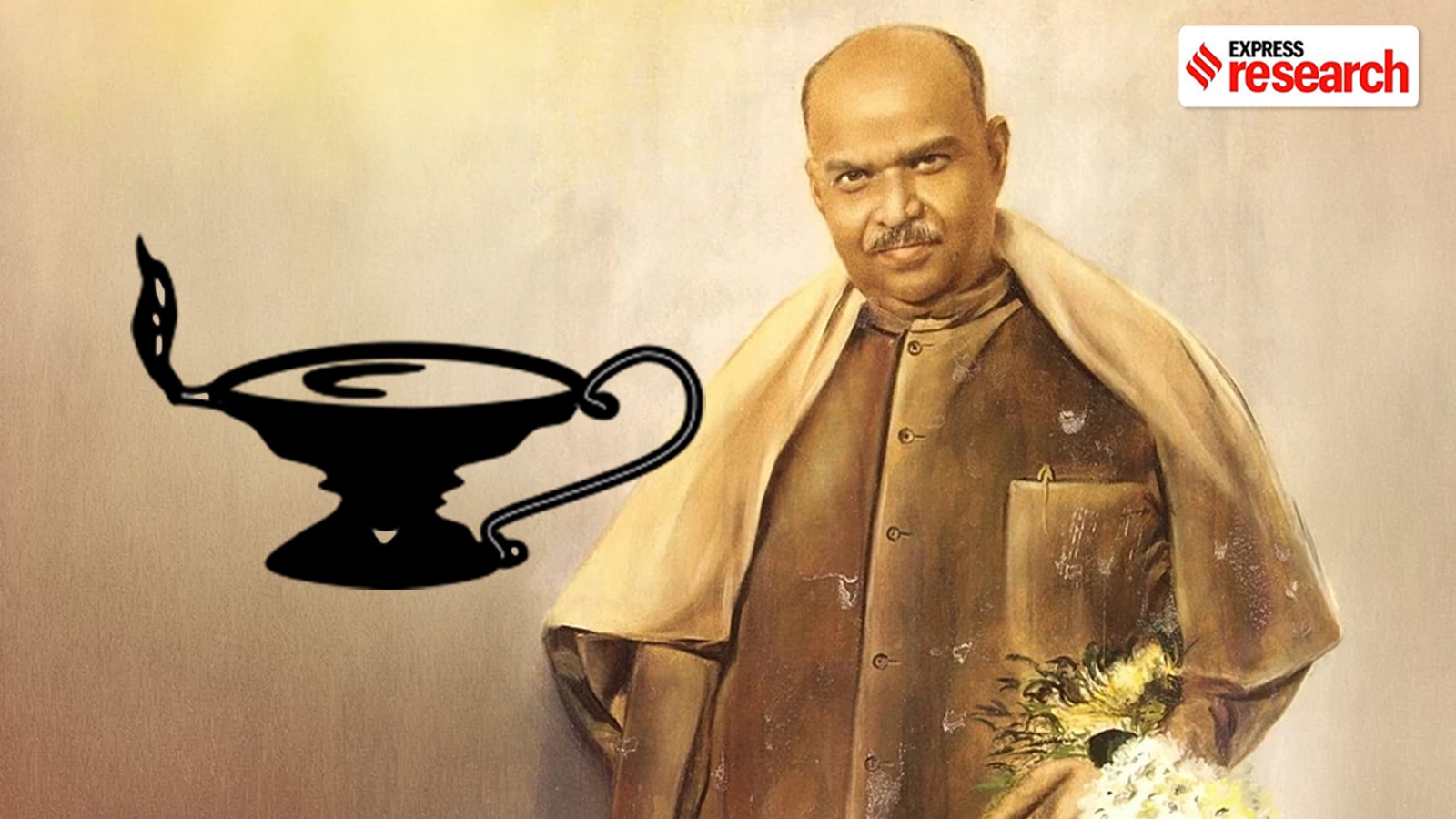
Walk into any BJP office, and you will likely find two portraits displayed side by side: Dr Syama Prasad Mookerjee, founder of the Bharatiya Jana Sangh, and Pandit Deen Dayal Upadhyaya, who led the party after Mookerjee’s death.
In the foreword to Syama Prasad Mookerjee: Life and Times (2018), authored by Tathagata Roy, former deputy prime minister L K Advani writes, “We in the BJP owe our position in Indian politics to the sacrifices of thousands who have preceded us, and above all to the vision and martyrdom of Dr Mookerjee.”
“He not only founded a party, but also led a political movement that swam against the prevailing current of the times,” writes Roy. As Bengal turns a new political page under the BJP, a look at the life and times of one of its earliest architects.
Mookerjee’s early life
Syama Prasad Mookerjee, born on July 6, 1901, was the son of the eminent Indian mathematician and lawyer Ashutosh Mookerjee. At the age of five, he began his schooling at the Bhawanipur Mitra Institution in Kolkata. After passing matriculation in 1917, he joined Presidency College. Enrolling for a BA in English Honours, he interestingly went on to pursue a master’s degree in Bengali, while simultaneously attending evening law classes.
His college years coincided with a period of global upheaval—the Russian Revolution, the final phase of the First World War, and sweeping political transformations across Europe, including the overthrow of the Czar, Lenin’s New Economic Policy, the fall of the Kaiser leading to the Weimar Republic, and the decline of the Ottoman Empire.
“On the Indian scene,” Roy notes, there was the “dastardly massacre of 1516 unarmed people at a peaceful gathering by a British colonel called Reginald Dyer at Jallianwala Bagh in Amritsar, and [Rabindranath] Tagore’s renouncing of his knighthood in protest thereof and the infamous Rowlatt Act of 1919, which empowered the government to arrest Indians without trial.” The Montagu-Chelmsford reforms of 1919 also introduced diarchy, granting Indians limited authority over less significant departments of governance.
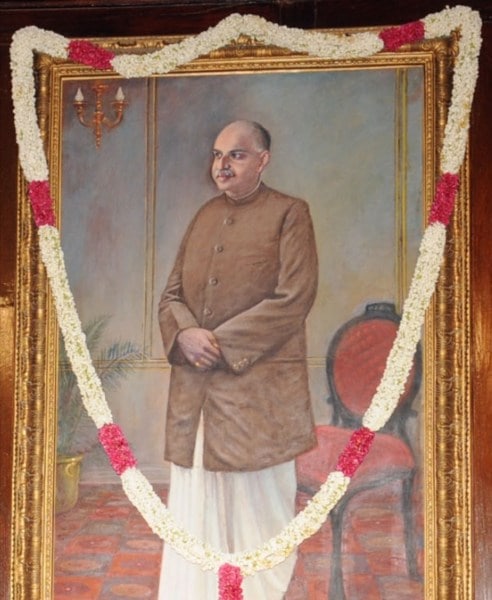 Portrait of Syama Prasad Mukherjee in Parliament of India (Wikipedia)
Despite this turbulent backdrop, Mookerjee himself showed little interest in active politics. On the personal front, he married Sudha Chakravarty in 1922 and completed his Bachelor of Law from Calcutta University in 1924. Thereafter, he set sail for England to become a barrister and enter the English Bar. “But Syama Prasad’s principal intention of going to England,” note Anirban Ganguly and Avadhesh Kumar Singh in Syama Prasad Mookerjee: His Vision of Education (2017), “was to study the working of universities in Britain.”
Story continues below this ad
Mookerjee returned in 1927, and two years later, he entered the legislative council from the University Constituency as an Indian National Congress (INC) candidate. This largely reflected his growing stature as an educationist. As Roy observes, “In a sense, this was not really a political move, because his intention behind entering the council was to act as a watchdog for the interests of the university in the legislature.”
Within a decade, Mookerjee rose to become the vice-chancellor of Calcutta University in 1934, the youngest at 33 years of age. During his tenure, he introduced instruction and examinations in the mother tongue up to the matriculation level. Roy further notes, “Among a few more of the tasks that he took upon himself were: (a) standardizing spellings in Bengali; (b) coining and compiling Bengali terminology for official, scientific and technical words…”
To the list, Ganguly and Singh add: “As vice chancellor, Dr Mookerjee supported nationalist scholars who wished to undertake serious research in Indian history from an Indian viewpoint; he encouraged excavations, opened the first museum of Indian history, culture and archaeology in the university and…in 1937, he invited Rabindranath Tagore to deliver the convocation address in Bengali—this was the first time ever that a convocation address was delivered in Bengali in the…University of Calcutta.”
The Hindu Mahasabha
“The primary reason behind Dr Mookerjee’s entry into full-time realpolitik,” according to Roy, “lay in the treatment meted out to the minority Bengali Hindus by the rabidly communal Muslim League-Krishak Praja Party coalition government of Bengal”.
Story continues below this ad
Roy writes, “Syama Prasad Mookerjee’s basic beliefs, ideology and political methods were distinctly, fundamentally and decidedly right wing, Indocentric and constitutional. He was a constitutional politician at heart, the very antithesis of a revolutionary.”
The deteriorating condition of Hindu minorities in Bengal eventually drew him into full-time political engagement through the Hindu Mahasabha. He was especially influenced by Veer Savarkar’s ideological framework. As Ganguly and Singh note, “Vinayak Damodar ‘Veer’ Savarkar, the All-India Hindu Mahasabha leader came to Bengal in August-September 1939 and Dr Mookerjee came in close contact with him and joined the Hindu Mahasabha.”
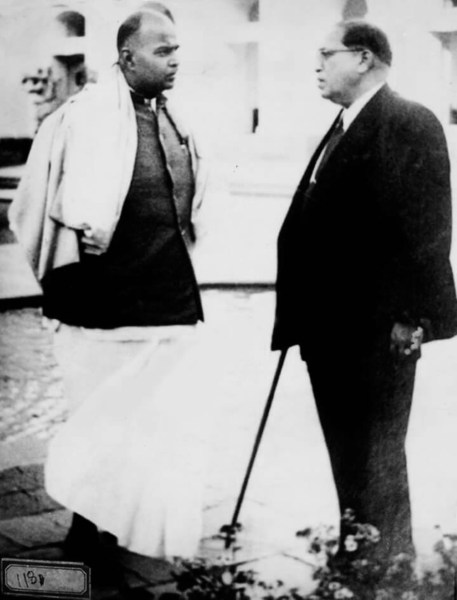 B. R. Ambedkar and Mookerjee talking on the campus of Parliament, 1951 (Wikipedia)
With Savarkar’s declining health in the 1940s, Mookerjee increasingly assumed the role of working president of the organisation. At the same time, internal rifts within the Congress in Bengal—particularly following Subhas Chandra Bose’s break with Mahatma Gandhi—helped the Hindu Mahasabha gain political prominence in the province. Roy notes, “His bold but rational presentation of the Mahasabha ideology and his frontal attack on the Congress policy of appeasement of and compromise with the Muslim League at the cost of the Hindus created a stir all over Bengal and India.”
This trajectory eventually culminated in his appointment as finance minister of Bengal in 1941-42 in A K Fazlul Haq’s coalition government, a position he would later resign from.
Story continues below this ad
Mookerjee and the partition of Bengal
By the late 1940s, the partition of Bengal was already gathering momentum, particularly after the formation of the ‘Bengal Partition League’. Its stated objective was the creation of a separate province to protect Hindu interests in the Hindu-majority regions of western Bengal. Mookerjee, convinced that continued Muslim League dominance would result in the “certain and sure annihilation” of Bengali Hindus, actively supported the idea of partition and mobilised opinion around it.
As Roy records, “Dr Mookerjee’s well-reasoned and forceful advocacy of the scheme for partition of Bengal succeeded in winning many Congressmen over to his side.”
Bengal (along with Punjab) was eventually partitioned under the supervision of Sir Cyril (later Lord) Radcliffe, the English barrister appointed to draw the boundary lines. Even in this process, Roy notes Mookerjee’s intervention: “Even here, Dr Mookerjee intervened and convinced Radcliffe that while deciding the population balance for deciding whether to award a particular unit of area to India or Pakistan, the unit to be considered should be the thana, the police station area, and not the district or subdivision.”
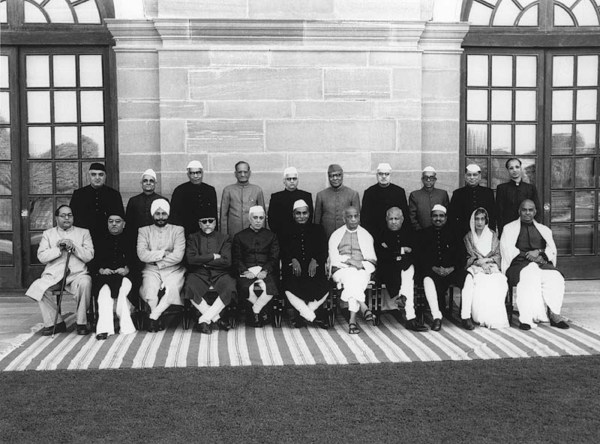 Shyama Prasad Mukherjee in the first Cabinet of India (Wikipedia)
After India became independent on August 15, 1947, Mookerjee was in the Hindu Mahasabha, while the British transferred power wholly to the Congress. Alongside his involvement in the partition of Bengal, Mookerjee also became a member of the Constituent Assembly.
Story continues below this ad
Even though he still led the Hindu Mahasabha, Gandhi insisted that Mookerjee be included in free India’s first Cabinet. “Sardar Patel played a decisive role in inducting both Dr BR Ambedkar and Dr Mookerjee in the Cabinet. On the other hand, Dr Mookerjee was a great support to Patel and always worked to strengthen his hands in his great effort to create the Indian union,” add Ganguly and Singh in their work.
Mookerjee went on to serve as the industry and supply minister between 1948 and 1950. He was also credited with several pioneering schemes, such as the Damodar Valley Corporation, fertiliser factory at Sindri, Chittaranjan Locomotive Works, and Hindustan Aircraft of Bangalore.
The Bharatiya Jana Sangh is born
Yet, the fate of Hindu minorities in East Bengal continued to deeply concern Mookerjee. When then Prime Minister Jawaharlal Nehru invited his Pakistani counterpart Liaquat Ali Khan to negotiate yet another agreement on minority welfare, Mookerjee opposed the initiative. He warned Nehru about the collapse of earlier understandings.
In a letter dated April 6, 1950, addressed to Nehru, Mookerjee tendered his resignation and requested to be relieved of his responsibilities at the earliest. The reasons, he explained, stemmed from the government’s approach to Indo-Pakistan relations, particularly concerning Bengal.
Story continues below this ad
Mookerjee’s resignation from the Cabinet and his entry into all-India opposition politics marked a decisive turning point. As Roy argues, “Had he not resigned, there would never have been a Bharatiya Jana Sangh, and no nationalist opposition to the Congress…”.
On returning to Calcutta, he immediately immersed himself in public life and launched a sustained critique of the Nehru-Liaquat Pact, which he viewed as symptomatic of the Indian government’s weakness in dealing with Pakistan.
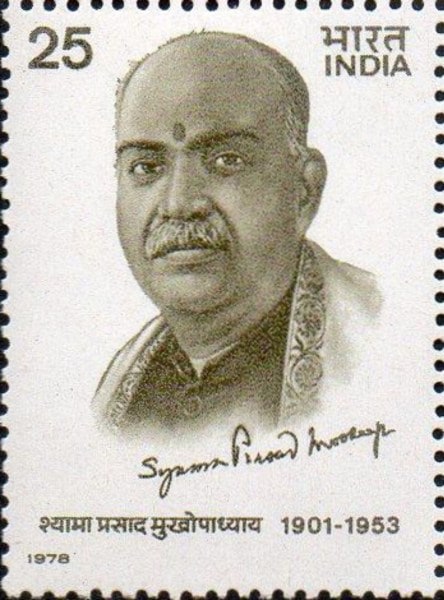 Mookerjee on a 1978 stamp of India (Wikipedia)
Roy notes that in his parliamentary speech on August 7, 1950, Mookerjee placed three alternatives before the government. He argued that since Pakistan had failed to ensure the safety of its Hindu population, India must either declare war to secure their protection or demand that Pakistan cede one-third of its eastern territory to enable the rehabilitation of Hindu refugees. The third option, he suggested, was a structured and peaceful exchange of populations between East and West Bengal, similar to what had been done in Punjab. None of these proposals was adopted.
At this stage, he met Shri Guruji Golwalkar, sarsanghchalak (head) of the Rashtriya Swayamsevak Sangh (RSS), who asked him to start a party for whom the RSS would give him some of its ablest workers. Mookerjee also met figures such as Lala Yodh Raj, Balraj Madhok and Lala Hansraj Gupta, among others influential in Delhi and Punjab politics.
Story continues below this ad
In October 1951, Mookerjee announced the creation of the Bharatiya Jana Sangh (BJS). In his presidential speech, cited by Ganguly and Singh, he said: “Our party believes that the future of Bharat lies in the proper appreciation and application of Bharatiya sanskriti and maryada.” Among its key priorities was the urgent strengthening of India’s military capacity through training for both men and women, nationalisation of defence forces, the creation of a large territorial army, and rapid development of defence industries. The party’s foreign policy, meanwhile, was to be guided primarily by enlightened national interest.
Although Mookerjee died under mysterious circumstances two years later, his ideologies endured. As Roy observes, “With the result that the BJP, successor to the Bharatiya Jana Sangh that he had founded, came to power in the central government under the stewardship of his one-time private secretary Atal Bihari Vajpayee, and became the first non-Congress government in India to last a full term between 1999 and 2004.” Later, in 2014, the party returned to power under Narendra Modi.
Under-documented, yet remembered
In October 2017, Roy recalls a question from the television show Kaun Banega Crorepati: “Which member of Jawaharlal Nehru’s cabinet resigned and founded a new party in 1951?” It was not an easy question, yet the contestant answered it correctly. The moment underscored a paradox: while Mookerjee’s legacy may be under-documented, it is not unrecognised.
“It is not very often that we come across a person who lives for fifty-two years and remains in politics only for fourteen years, but within that short period rises to great heights and makes history,” note Ganguly and Singh.
Story continues below this ad
Today, as the BJP consolidates its presence in Bengal, the trajectory comes full circle—returning attention, once again, to one of its earliest ideological architects.