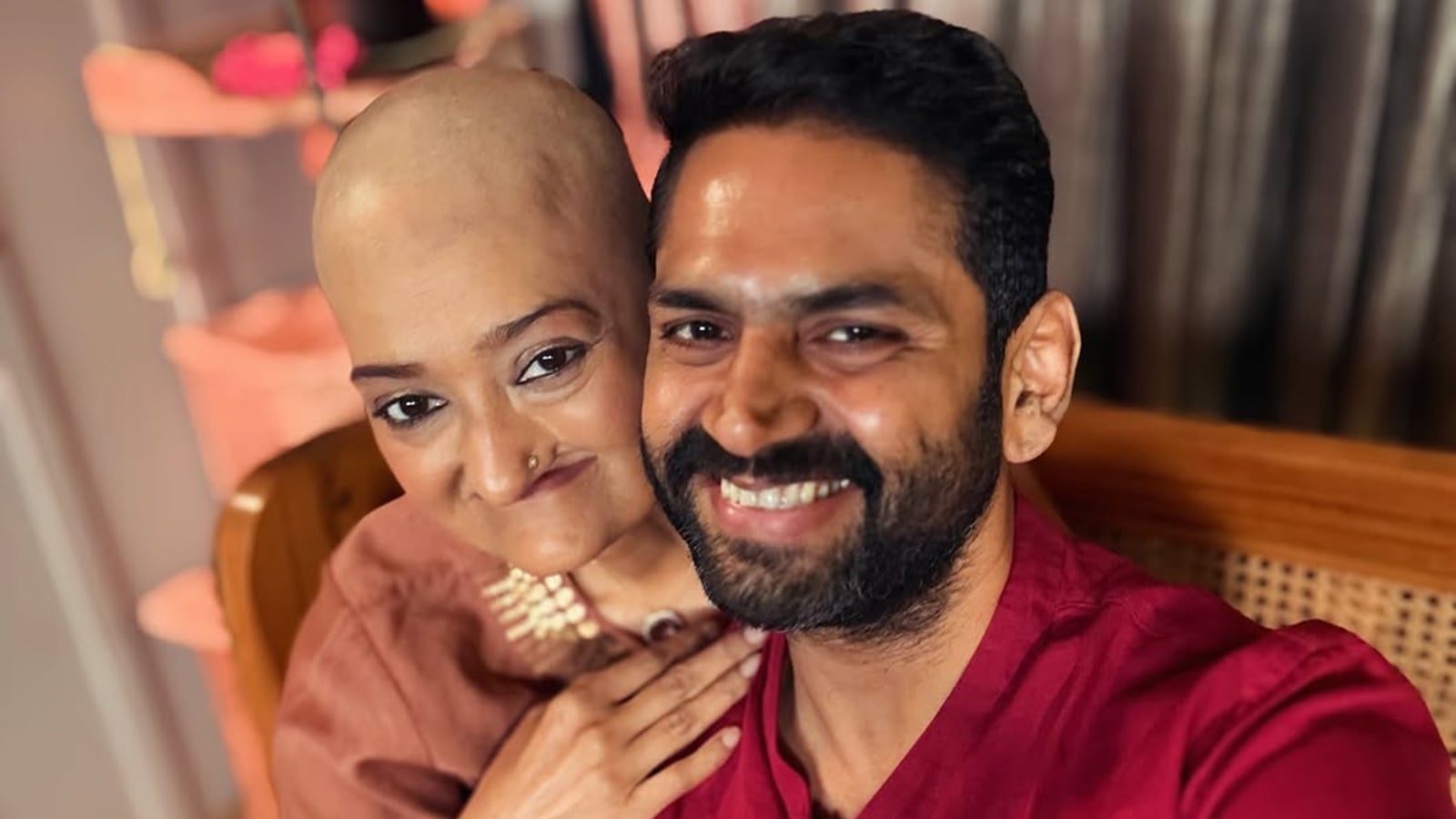
Actor Sharib Hashmi, best known for his role in The Family Man, recently opened up about the difficult period his family is currently navigating after his wife, Nasreen, suffered a sixth relapse of cancer.
In an interview with Hindustan Times, Sharib said, “I am just trying to keep my mind in a positive frame, otherwise it will become very difficult for me to deal with it. The treatment is underway, and thankfully, she is responding to it positively. My wife is a big fighter, and seeing her spirit gives us hope, too. But it is a long journey as the cancer has spread all over the body.”

Nasreen was first diagnosed with oral cancer in August 2018 and has undergone five surgeries since then. Although she had gone into remission after her last surgery in September 2024, the disease returned earlier this year. Recalling how the relapse was detected, Sharib shared, “Unhe do-dhai mahine se khaansi chal rahi thi (She had been coughing for 2-2.5 months) and at that time, everyone was coughing due to the poor AQI. So, we thought it may be because of that. We got an X-ray done too, and there was no problem with it. But in mid-Feb, she got a blister in her mouth, and we immediately rushed to the doctor, who asked us to get a biopsy and a PET scan done. And in that, the new diagnosis was made (sic).”
Nasreen is currently undergoing chemotherapy and immunotherapy, while the family is also exploring targeted therapy for the future. Sharib also spoke honestly about the financial burden of long-term illness and the pressure of continuing to work despite emotional exhaustion. “Main zyada se zyada samay uske saath bitata hun par mujhe paise bhi kamane hain (I spend as much time with her as I can but I need to earn some money as well) as the expenses now are exorbitant. I need more work so that I can afford to pay my wife’s medical bills, as even my insurance can’t cover the amount this treatment costs,” he said.
He added, “I can’t afford to say no to any work right now, as even last year didn’t go well financially for me, and this year has started on this note. I am looking out for more and more work, so that I don’t have to think about the cost of the treatment my wife needs. We are looking at doing target therapy post the current treatment regime, and it’s going to be very expensive. I am hoping to be able to afford it on my own.”
Sharib also reflected on how the illness has affected their children emotionally. “We both explained the situation to the kids together. Our son is a bit older, and he understands the gravity of the situation. Due to this cancer, I feel they both matured before their time. They have seen our struggle since 2018, so it would have impacted them too, but a lot of things they don’t even tell us, thinking of our situation (sic).”
When one parent becomes seriously ill for years
Gurleen Baruah, Existential Coach at That Culture Thing, tells indianexpress.com, “Every family is different. Their circumstances, support systems, coping styles, emotional culture, and resources can all be very different. But yes, when one parent is seriously ill for a long time, it is usually very hard for both the spouse and the children. The spouse often takes on the role of caregiver, trying to stay strong, manage responsibilities, and emotionally hold the family together, and that can take a deep toll over time.”
Story continues below this ad
She adds that children, in their own ways, may also experience grief, confusion, fear, or sadness, even if they do not always express it openly. It becomes a difficult emotional phase for the whole family, and everyone processes it differently.
How can prolonged financial stress during illness impact mental health
It hampers a lot because financial stress adds to every other existing stress. Baruah states that long-term illness already brings uncertainty, emotional exhaustion, caregiving fatigue, and fear, and financial pressure can intensify all of that. “Making ends meet, managing treatment costs, balancing work with caregiving, and constantly thinking about survival can slowly drain emotional energy and motivation. Families may begin functioning only in survival mode,” she says.
Signs parents should watch for
According to Baruah, parents can gently observe changes that may or may not be related directly, but still deserve attention, like withdrawal, sadness, increased silence, irritability, clinginess, sleep changes, anxiety, or difficulty expressing feelings. “Children also experience grief, fear, and uncertainty in their own ways. The important thing is creating emotional safety where the child feels seen, heard, and allowed to express emotions without pressure to always stay strong.”