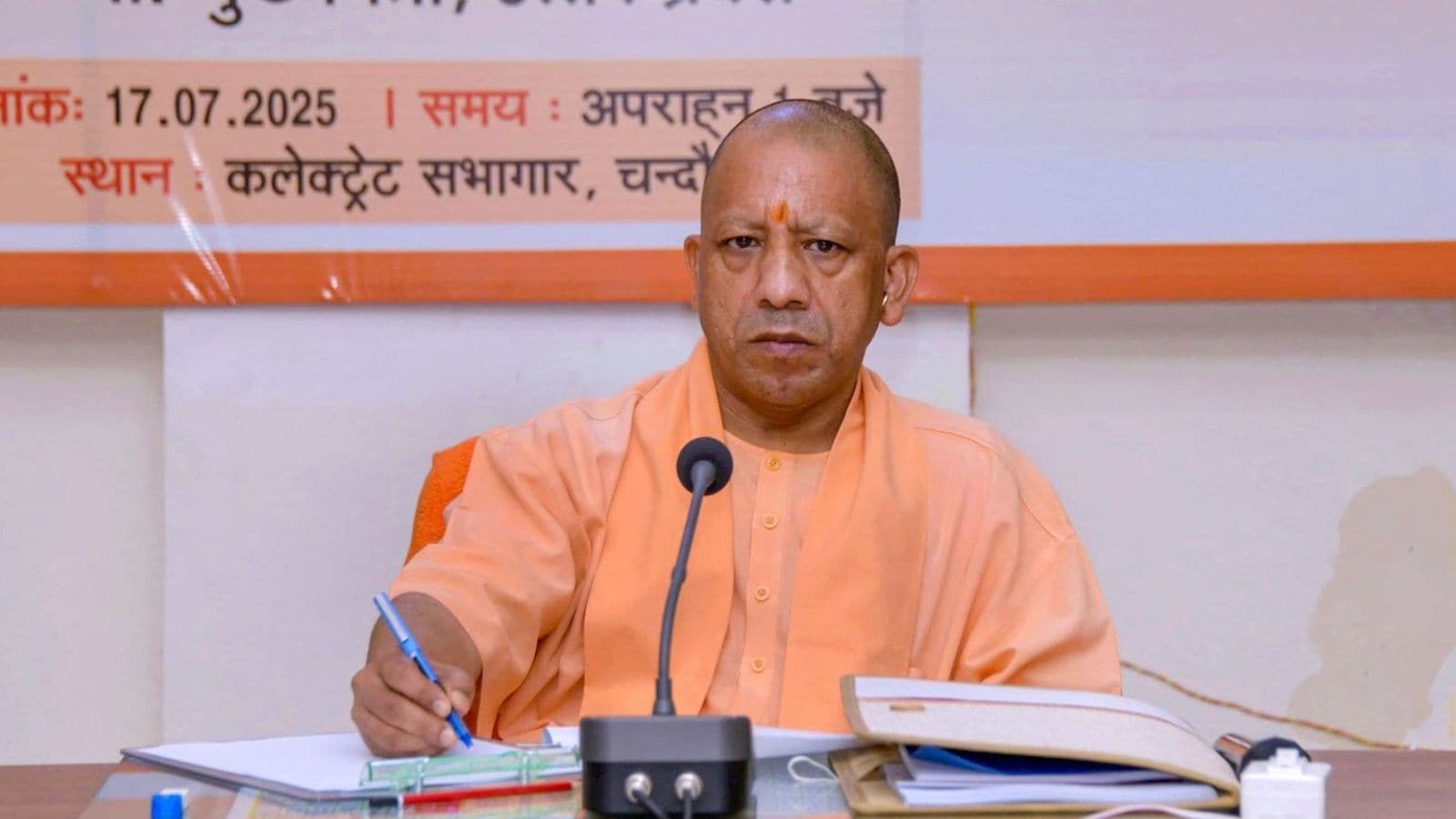
Months before Uttar Pradesh goes to the polls, the Yogi Adityanath government’s Cabinet expansion on Sunday reveals a calibrated social and political balancing exercise, reinforcing its outreach among non-Yadav OBCs and Dalits, while simultaneously sending a signal to Brahmins amid murmurs of discontent within sections of the community.
The BJP drafted in six new ministers in the state government and elevated two Ministers of State to MoS Independent Charge. Of the six new inductions, three are from OBC communities, two are from the Scheduled Castes, and one is a Brahmin leader who had crossed over from the Samajwadi Party (SP).

The move comes at a time when the SP has aggressively pushed its “PDA” plank — an acronym for its outreach to Pichhda (OBCs), Dalits, Alpsankhyak (minorities) — attempting to consolidate backward classes, Dalits, and minorities against the BJP ahead of the Assembly elections. The BJP’s response appears aimed at consolidating its own coalition among non-Yadav OBCs and non-Jatav Dalits, groups that have been central to the party’s electoral dominance in UP since 2014.
The expansion also reflects another recurring BJP strategy in UP, that of rewarding long-time organisation leaders and workers.
Non-Yadav OBC strategy
Among the most politically significant inductions is former state BJP president Bhupendra Chaudhary, a prominent Jat leader from western UP. Chaudhary’s return to the Cabinet after completing his tenure leading the state unit indicates the party’s continued emphasis on western UP, where caste equations and agrarian politics remain crucial.
While Jats have largely remained aligned with the BJP despite intermittent tensions during the farmers’ protests of the past five to six years, the party appears keen to consolidate the community before 2027, especially in western districts where ally Rashtriya Lok Dal (RLD) has historically been influential.
The induction of Hansraj Vishwakarma, a three-time BJP district president from Prime Minister Narendra Modi’s parliamentary constituency Varanasi further underlines the party’s outreach among the artisan and backward castes. The Vishwakarma community has been an important target group in the BJP’s recent social coalition-building, especially across eastern UP.
Party leaders also see symbolic value in elevating a grassroots organisational figure from Varanasi, politically and symbolically the BJP’s most high-profile parliamentary constituency.
Similarly, Kailash Singh Rajput’s inclusion strengthens the BJP’s outreach among Lodhs, the influential OBC community associated politically with former CM Kalyan Singh. His induction is significant not just because he represents Kannauj — the Lok Sabha constituency represented by SP president Akhilesh Yadav — but also because the BJP continues to rely on the Lodh vote bank in central UP.
Together, the three appointments suggest that the BJP is doubling down on its established formula of stitching together smaller and non-dominant backward caste groups to counter the SP’s traditional Yadav-centric social base.
Dalit outreach
The induction of Surendra Diler and Krishna Paswan indicates the BJP’s attempt to deepen its outreach among Dalit communities beyond symbolic representation.
Diler, a young MLA from Khair in Aligarh, belongs to the Valmiki community and comes from a politically influential BJP family in western UP. His inclusion is likely aimed at consolidating Valmiki voters, a segment the BJP has actively courted in recent years through welfare and political representation.
Krishna Paswan’s induction carries multiple political messages. A four-term MLA from Fatehpur’s reserved Khaga seat, she is the only woman included in the expansion and rose through the party ranks, starting at the panchayat level.
At a time when the BJP depends on women beneficiaries of welfare schemes to win elections, her elevation allows the party to combine gender representation with Dalit outreach.
The Brahmin message
If the broader expansion tilts toward OBCs and Dalits, Manoj Kumar Pandey’s inclusion stands out for its political signalling toward Brahmins. A former SP minister once considered close to the Opposition party’s president, Akhilesh Yadav, Pandey broke ranks during the 2024 Rajya Sabha elections and later openly supported BJP candidates before being expelled from the SP.
While the BJP continues to enjoy substantial upper-caste support, Opposition parties have repeatedly attempted to highlight alleged dissatisfaction among Brahmins over representation and administrative issues. By inducting Pandey, the BJP appears to be trying to blunt that narrative while simultaneously weakening the SP’s upper-caste outreach.
Another notable feature of the expansion is the emphasis on organisational loyalty and cadre politics rather than solely electoral calculations.
Both Chaudhary and Vishwakarma are leaders with a long history in the BJP’s organisational structure. Paswan, too, is viewed internally as a grassroots political worker rather than a media-centric face.
The message appears deliberate. Ahead of a high-stakes election, the BJP leadership is prioritising social representation while rewarding leaders with organisational depth and local caste influence.
With the latest expansion, the Uttar Pradesh Council of Ministers now has 60 members, up from 54 earlier. But beyond numbers, the reshuffle offers an early indication of the BJP’s social strategy for 2027: retaining its broad coalition of non-Yadav OBCs, Dalits, and upper castes while countering the Opposition’s attempt to consolidate backward caste politics under the PDA banner.