Walk into any bar in Mumbai, Delhi or Bengaluru on a Friday night and you will find twenty-somethings nursing a Paloma or Picante, debating the provenance of a single malt, listening intently as the bartender explains where a particular ingredient has been sourced from or how the cocktail was clarified. They are not, contrary to a persistent global narrative, abstaining. They are drinking, just not the way their parents did.
“People are definitely drinking. If anything, they are drinking better. They are not drinking to get drunk anymore. There’s a shift towards moderation and responsibility,” says Riyaaz Amlani, managing director, Impresario Entertainment Hospitality, whose restaurants and bars cater extensively to younger consumers.

The idea that an entire generation has turned its back on alcohol has been circulating in international media for several years now and more recently in India, bolstered by studies in the West combined with the rising health consciousness and the popularity of sober-curious lifestyles. But the data, even globally, is more nuanced.
According to IWSR’s Bevtrac survey, which tracked more than 26,000 people across 15 global markets, including India, alcohol participation among Gen Z rose from 60 per cent in April 2023 to 70 per cent in March 2025. In India, the experts point out, the story is ‘how’ they drink, and not ‘whether’ they drink.
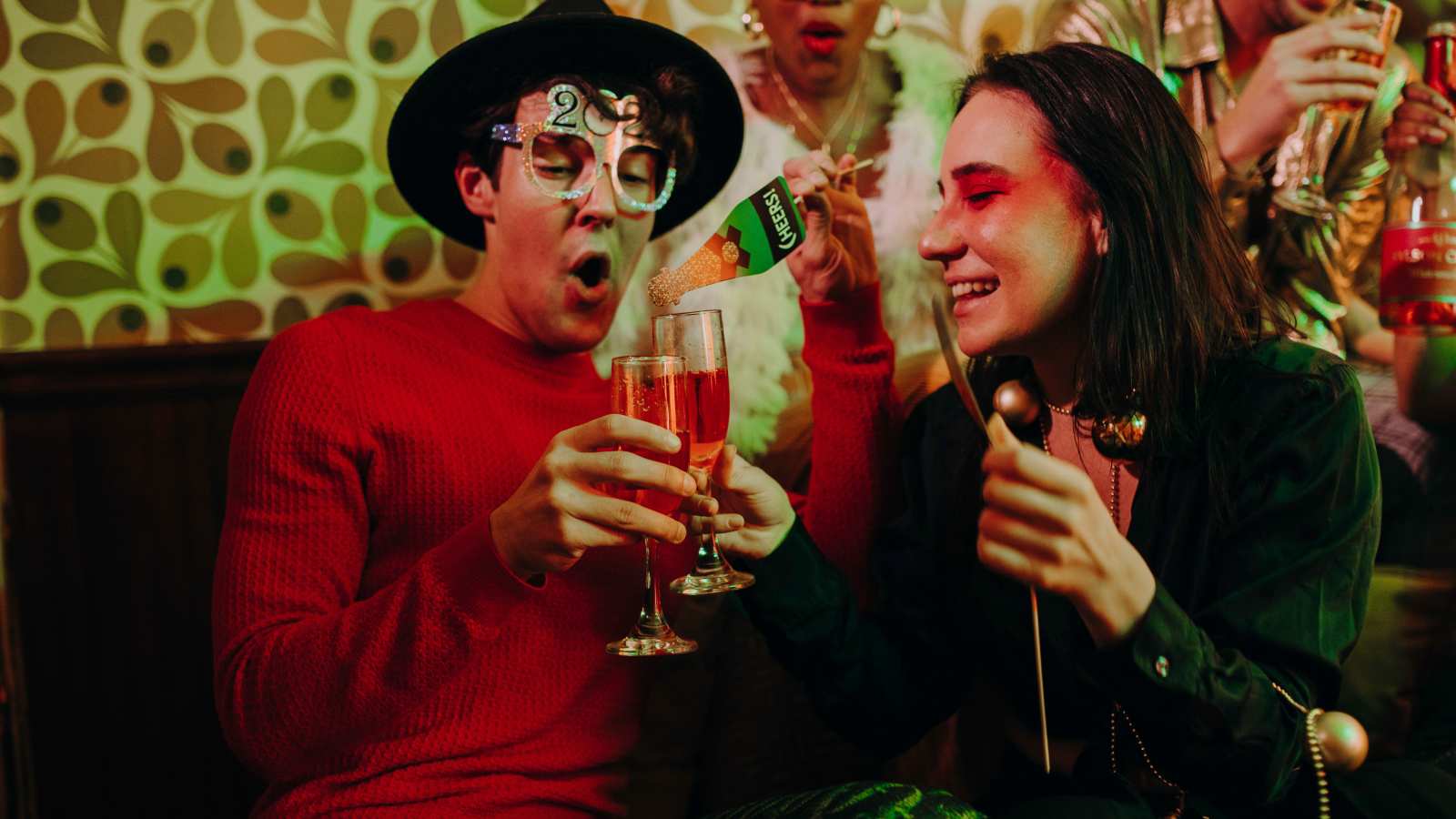 Gen Z isn’t saying cheers less often. They’re just being a lot pickier about what they’re raising a glass to. (Source: Pexels)
Pooja Bhatia, a PR professional in Mumbai, says when she started drinking it was Jägermeister bombs and tequila shots. “But now I like Paloma, Picante or tequila on the rocks,” she says. She drinks two or three times a week, though she’s been trying to cut back to once. The reason? “I hate hangovers. I hate my productivity taking a dip. It disrupts my health goals,” says Bhatia, adding “And if I am spending Rs 1,500 on a drink, it should have a story, good ingredients and top-notch liquor.”
Nikhil Agarwal, 47, one of India’s leading experts on wine and spirits, who is also in the business of their imports, has watched this shift with both professional interest and a certain generational perspective. “Wine has become a very popular category among Gen Z. In white spirits, tequila and gin are clearly leading. People are happy to pay Rs 7,000-Rs 9,000 for a bottle of tequila, around Rs 1,000 for a cocktail, upwards of Rs 2,000 for a bottle of wine,” says Agarwal, who is bullish about the growth of the segment in India for good reason. “Even if just 3 per cent of India’s population is consuming premium alcohol, that’s roughly 43 million people. That’s more than the population of Australia,” he adds.
The India market, by most accounts, is where the global spirits industry is now pinning considerable hope, and which is why we see new launches, from global leaders as well as by emerging names within the country. “India remains the only market with all three indicators — consumer sentiment, recalled volume and recalled spend — in positive territory, as upper-middle-class consumers continue to drink and spend more,” an IWSR report quoted Richard Halstead, COO Consumer Insights.
Diageo, which acquired United Spirits in 2013, today operates one of the largest portfolios in the country. They have 100 million new legal drinking age (LDA) consumers added every year.
“India represents a unique combination of scale and long-term opportunity. That is why we often describe it as the consumer market of the next decade,” says Ruchira Jaitly, chief marketing officer, Diageo India, pointing to a structural shift in the nature of that growth. “The most important shift we have seen is the move from a purely volume-led to a value and experience-led model.”
For Satyavarapu Nikitha, a brand marketing professional in her 20s, from Bengaluru, her first drink was a cocktail. Today, she drinks about once a month. “When I go out, I like to try new cocktails, but it is usually just a sip or two,” she says. Her friends, who all are Gen Z, “like getting a good high, but not passing out. That is not the goal.”
It is a phrase you hear with remarkable consistency across this generation. For Chirag Kajale, who runs a creator agency in Mumbai, drinking is woven into the social fabric of his week but not in a way previous generations would recognise.
“My friends and I have a ritual: We meet every Monday, drink and just talk.” On days when he and his friends want to step out, they gravitate toward tap bars like Doolally Taproom. For him, the point is connection, not consumption. “Alcohol is a great social agent, it opens doors. I’ve built some meaningful relationships over drinks and those connections have helped me professionally.”
Rakshay Dhariwal, founder and managing director of Maya Pistola Agavepura and PCO, pushes back on the idea that global trends translate neatly to India. “Gen Z is far more experimental. For millennials, drinking was often the default way to socialise. But Gen Z do a lot more. They will meet for coffee, play sports like pickleball, or go out. Drinking is just one part of a larger social mix.”
Debashish Shyam, co-founder of Ardent Alcobev, which produces the single malt Dram Bell, identifies the same distinction with a phrase that neatly captures the generation’s ethos: “They’re not anti-alcohol. They’re anti-excess.”
The format of drinking has also shifted. Sakshee Bhatia, 24, a publicist in Mumbai, prefers gin like Sector Hibiscus & Peach or a black label whiskey if drinking with family. Even with friends, she prefers drinks at home than out. “It feels safer, no one has to worry about driving, and everyone’s in one place,” she says, adding that the narrative around her generation amuses her a bit. “I find it funny when people say Gen Z isn’t drinking. I do know people who don’t drink, but I also know plenty who definitely do and are holding the fort for the rest of us,” she says.
Meanwhile, Sreehari TK, 25, a data analyst from Kerala who started on whisky in college, has consciously pulled back. “I am focusing on building a good physique. I go to the gym and follow a diet,” says TK, who now drinks once or twice a month. His story is held up by those who argue Gen Z is moderating, and he is. But even his benchmark has quietly risen: his preferred drink is Signature Rare Aged Whisky on casual days, and for a special occasion, he’ll go up to a
Jack Daniel’s.
Agarwal credits the infrastructure that has grown up around them — the craft cocktail bar, the wine list, the bartender who explains his ingredients — for fundamentally changing what drinking means for this cohort. “People are only now starting to explore wine and cocktails. And this isn’t limited to metros — step outside Mumbai and Delhi, and you’ll see young people in cities like Nagpur going out for cocktails.”
Dhariwal also points to a clear shift in behaviour. “Earlier, you’d play drinking games and finish drinks quickly. Today, they’d rather stay tipsy, pace themselves, and prolong the experience. You might even see higher overall consumption across an evening, but through low alcohol cocktails rather than quick, strong drinks.”
Pooja Bhatia — spending Rs 4,000-5,000 on three cocktails in a single evening, carrying Liquid IV party electrolytes to a concert in case she wants energy without the alcohol, heading to Bare or Bombay Canteen rather than a club because the music in clubs makes her drink more than she wants to — is the clearest portrait of what this shift looks like from the inside.
She is not drinking less. She is drinking on her own terms.