New Delhi:
Imagine waking up on a Monday morning and not worrying about traffic.
Your child’s school is a short walk away. The grocery store sits at the entrance of your community. The gym is across the street. The pharmacy is downstairs. The office is a quick metro ride or a 10-minute drive away. On weekends, the mall, cinema and restaurants are all within reach without spending half the day navigating clogged roads.
For a growing number of urban Indians, this is no longer a fantasy. It is becoming a new way of living.
Welcome to the world of the 15-minute city.
The idea is simple. Everything you need for daily life — work, education, healthcare, shopping, recreation and social interaction — should be accessible within 15 minutes of your home, either by walking, cycling or a short public transport ride.
In a country where daily commutes can easily consume two to three hours, the concept is finding increasing acceptance among homebuyers, developers and investors alike.
“Honestly, it comes down to one thing buyers can no longer afford to waste: time,” says Pushpamitra Das, Chairman and Managing Director of JUSTO RealFintech Ltd.
“The daily commute has quietly become the single biggest tax on urban life. Buyers have stopped asking only how big the flat is and started asking how much of their life an address gives back to them.”
That shift is reshaping India’s residential landscape.
Buying Time, Not Just Homes
For decades, Indian homebuyers focused on three things: location, price and possession timelines.
Today, the checklist is much longer.
People want open spaces. Walking trails. Schools nearby. Healthcare access. Safety. Community spaces. Recreational facilities. Retail convenience.
More importantly, they want these elements stitched together into a single ecosystem.
According to Das, buyers are increasingly purchasing a lifestyle rather than a set of walls. Hybrid work has further accelerated this transition by making the home the centre of everyday life.
This is one reason premium and luxury housing now accounts for a significant share of new launches across major cities. Buyers are willing to stretch budgets for environments that improve their quality of life.
Integrated townships are emerging as the preferred format for many affluent urban families because they combine convenience, security, green spaces and social infrastructure within one master-planned development.
The Premium For Convenience
The convenience comes at a cost. And buyers seem willing to pay for it. “Yes, and quite willingly, provided the value is real and not just painted on a brochure,” says Das.
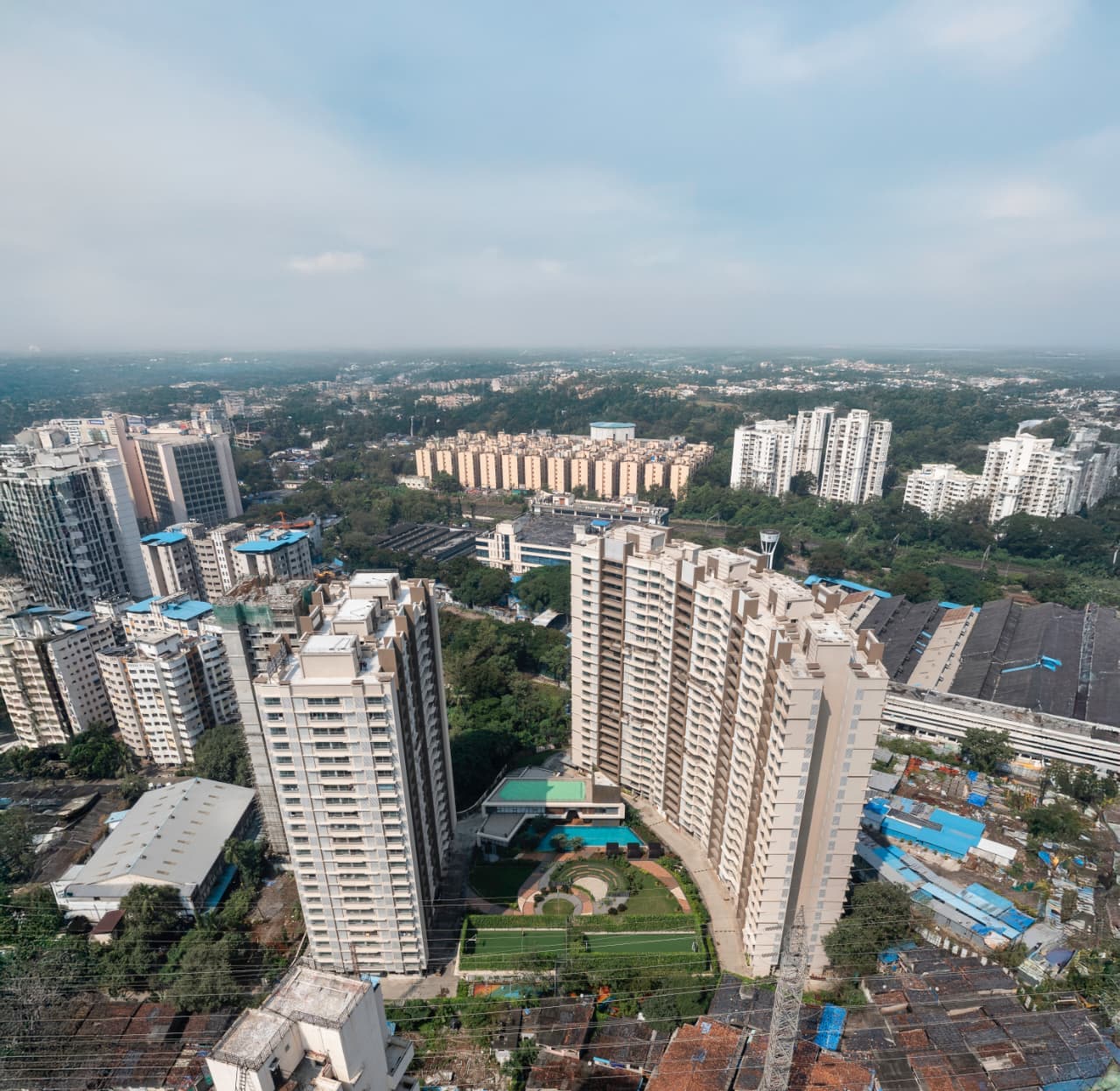
Photo Credit: A 2-BHK apartment within an integrated township can cost anywhere between Rs 1.5 crore and Rs 3.5 crore.
The logic is straightforward. If schools, pharmacies, cafes, grocery stores and fitness centres are all within walking distance, residents save countless hours every week.
That saved time has economic value.
According to Shagun Kalra, Development Manager at RMR Group, residents in these projects are not merely paying for a home.
“They are paying for the time they save every day – time that would otherwise be lost to commuting for groceries, school runs or medical needs.”
The pricing reflects this reality.
Across major metros such as Mumbai, Delhi-NCR, Bengaluru, Chennai and Pune, a typical 2-BHK apartment within a well-planned integrated township can cost anywhere between Rs 1.5 crore and Rs 3.5 crore.
Penthouses generally start around Rs 3.5 crore and can comfortably exceed Rs 5 crore in premium developments that combine residential, office, retail, wellness and hospitality components within the same ecosystem.
As urban land becomes scarcer and congestion worsens, Kalra believes this premium could strengthen further over time.
A Cure For Urban Time Poverty
Urban planners often talk about “time poverty” — the hidden cost imposed by poor city design. The average city resident spends hours travelling between home, work, school, healthcare facilities and shopping destinations.
The 15-minute city attempts to solve exactly that problem. According to Kalra, successful projects rely on three critical design principles.
The first is mixed-use planning. Homes, offices, schools, clinics and retail spaces coexist within the same neighbourhood rather than being separated into isolated zones.
The second is deliberate programming of everyday services. Grocery stores, pharmacies, diagnostic centres, crèches and primary schools are intentionally built into the township’s master plan.
The third is transit integration. “No township can replicate everything a city offers,” Kalra says.
The objective is to ensure that daily needs are within walking distance, while occasional needs — specialist hospitals, universities or central business districts — remain accessible through metro systems or other mass transit networks.
Together, these elements dramatically reduce the need for long-distance travel.
Why Businesses Love The Idea Too
The 15-minute city isn’t changing only residential real estate. It is transforming how companies think about workplaces.
According to Suvrat Jain, Co-Founder and CEO of Onward Workspaces, enterprises today evaluate locations very differently than they did a few years ago.
Clients are no longer focused only on rent or square footage. “They are asking how their people will get there, what is around the building, and whether the location works for the kind of talent they are trying to attract and retain,” Jain says.
That shift is encouraging companies to move away from the traditional model of a single headquarters located in a central business district.
Instead, many firms now prefer distributed office networks embedded within the same corridors where employees already live. The objective is simple: reduce commute stress and improve workplace accessibility.
According to Jain, the benefits are measurable. “When an employee spends two hours a day commuting, that is not just a personal inconvenience. It is a productivity cost, an engagement cost and eventually a retention cost.”
He says companies operating from locations closer to employee catchments often witness higher attendance, stronger engagement and lower attrition.
For businesses struggling with talent retention, proximity is increasingly becoming a competitive advantage.
The Investor Angle
These integrated ecosystems are also attracting investor attention. Jain notes that assets located in walkable, well-connected corridors are developing a different risk profile compared with conventional properties.
At Onward Workspaces, centres located within mixed-use ecosystems consistently record the strongest client retention levels. Nearly 98 per cent of clients renew their agreements, with location accessibility frequently ranking among the top reasons.
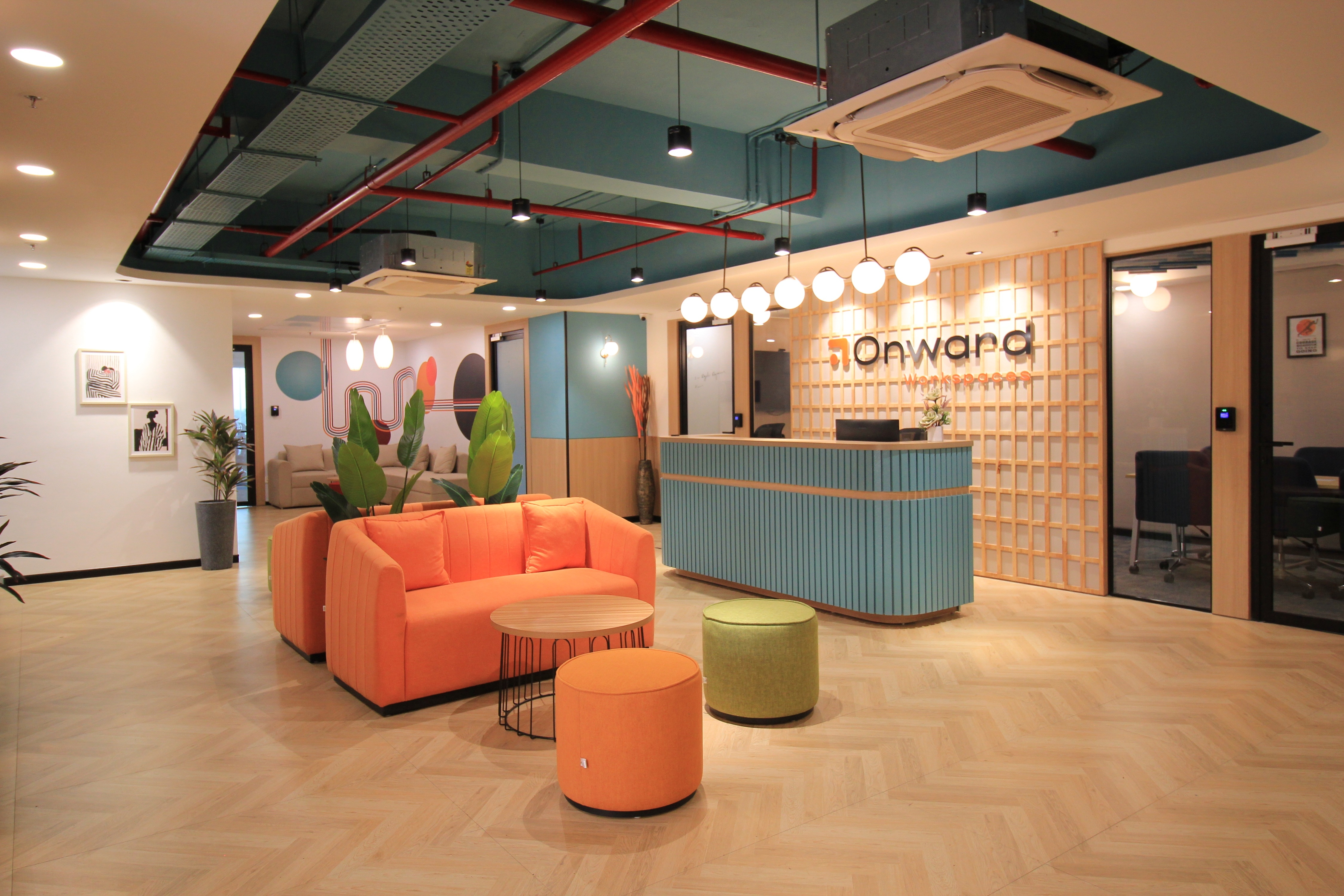
Many firms now prefer office networks embedded within the same corridors where employees already live.
For investors, that creates a powerful signal. High retention often translates into stable occupancy, sustainable rental yields and stronger long-term asset appreciation. The same principle applies to residential markets.
Metro connectivity has emerged as a major value driver. Das points to research suggesting that metro-linked assets appreciate significantly faster than projects without comparable connectivity.
The key, however, is genuine proximity to established transit nodes rather than simply being located somewhere along a future corridor.
Where The Boom Is Happening
The strongest activity is currently concentrated in India’s largest metropolitan regions. In Bengaluru, hotspots include Whitefield, Sarjapur Road and the airport corridor.
Pune’s Kharadi, Hinjewadi, Baner and Wakad markets are witnessing similar trends. In Hyderabad, developers are betting heavily on Gachibowli, Kokapet and the Financial District.
Mumbai Metropolitan Region is seeing activity across Thane, Navi Mumbai and Panvel, supported by expanding infrastructure networks.
Delhi-NCR has emerged as another major centre, with projects taking shape along the Dwarka Expressway, Golf Course Extension Road and the upcoming Jewar corridor.
According to Kalra, India already has several dozen projects that fit the functional definition of a 15-minute city, with many more likely to emerge as metro systems expand.
The concept is also spreading beyond the largest metros. Cities such as Lucknow, Chandigarh, Dehradun, Coimbatore, Ahmedabad and Kochi are beginning to adopt elements of the model as rising incomes and improving infrastructure reshape buyer expectations.
Not A Silver Bullet
Despite the enthusiasm, experts caution that the model is not without challenges. Large contiguous land parcels remain difficult to assemble.
Land ownership is often fragmented. Approval processes can be lengthy. Infrastructure investments are substantial.
Affordability remains another major hurdle.
While premium buyers are embracing integrated communities, scaling the model across income groups will require careful planning and collaboration between developers, urban planners and governments.
Das believes India’s version of the 15-minute city cannot simply replicate global examples.
Instead, it must account for the country’s density, affordability constraints, public transport systems and mixed-income realities.
Yet the direction of travel appears clear.
“The future won’t belong to the old-style residential colony,” Das says. “It will belong to complete, connected, professionally managed urban ecosystems.”
And perhaps that is the biggest appeal of the 15-minute city.
In an era when traffic often dictates how people live, work and spend time with their families, these developments are selling something far more valuable than real estate.
They are selling time. And in modern urban India, that may be the ultimate luxury.