5 min readNew DelhiJul 24, 2026 08:01 AM IST
Microsoft is rapidly expanding the use of its in-house MAI family of artificial intelligence (AI) models across products including GitHub Copilot, Excel, Outlook and other Microsoft 365 services. The company seeks to reduce inference costs while maintaining, and in some cases improving, performance when compared with frontier AI models.
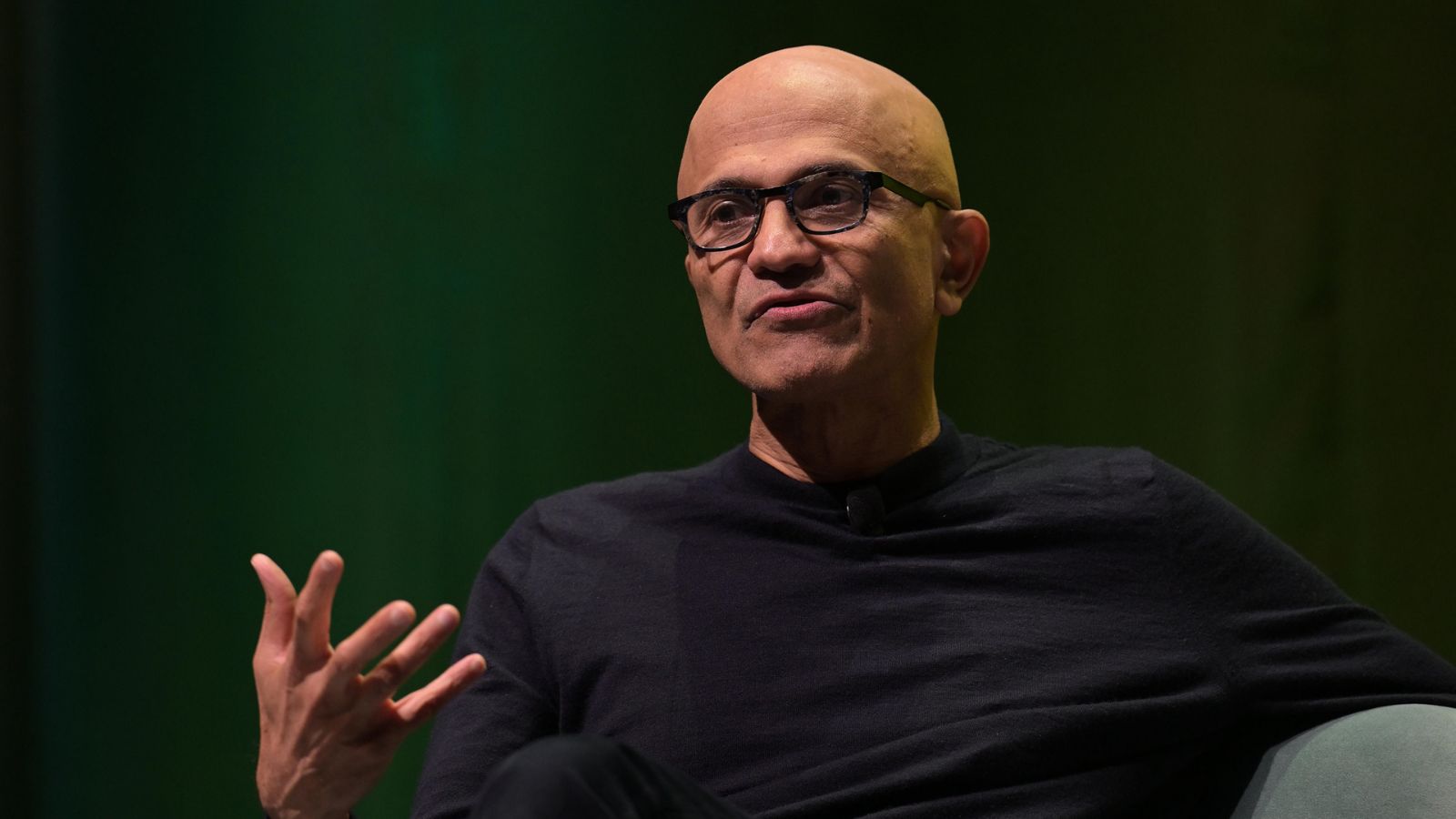
Microsoft CEO Satya Nadella, in a blog post on Thursday, July 23, shared what he described as the company’s ‘Frontier Diffusion & Control’ strategy. He argued that the future of enterprise AI lies not in depending solely on a single frontier model, but in optimising the entire AI system around specific use cases.

The latest announcement builds on Microsoft’s new research showing that MAI models, trained using reinforcement learning environments (RLEs) tailored for individual products, have achieved stellar gains in GitHub Copilot and Excel by learning from real-world customer workflows.
“In a world where software has real marginal cost for the first time, how do we ensure frontier benefits are diffused across the entire ecosystem?” Nadella wrote. “The key is to optimise the cost-to-outcome frontier in real world context. In practical terms, that means using the right model for each task, and optimising the context, skills, tools, and agent harness around it.”
According to Microsoft, the MAI models have been developed with “clean data lineage” and are designed to transfer learning from general-purpose capabilities to specialised enterprise tasks. Rather than replacing frontier AI models, Microsoft says it will continue using models from partners such as OpenAI and Anthropic alongside MAI within a broader orchestration system.
“In our products, frontier models from OpenAI and Anthropic are part of the orchestration system alongside MAI,” Nadella said. “But the model is only one part of the hill-climbing system. Harness, memory, context, tools, skills, user interactions, etc. all shape the evals and performance of these agentic systems.”
Microsoft said this approach allows it to direct expensive frontier models for the most demanding AI workloads while routing everyday tasks to more efficient in-house models. “We can now take saturated frontier capabilities and deliver them at scale and at lower cost through models optimised for high-usage products, while continuing to use frontier models for frontier needs,” Nadella wrote.
Story continues below this ad
The company describes this optimisation process as ‘hill climbing,’ which means AI systems are continuously improved using product-specific evaluations and reinforcement learning based on real customer interactions instead of generic benchmarks.
“The other key criteria to ensure that you are in control, is your evals should continue to hill climb even when any given model has been removed,” Nadella said. “We build RLEs where models learn inside the product system and are rewarded for completing the tasks customers actually care about.”
Microsoft said it deliberately keeps key components such as memory, context, skills and product harnesses outside the models themselves, making it easier to swap models without disrupting product performance.
The tech giant claims this strategy is already producing measurable results.”We are now seeing MAI models outperform general-purpose frontier models in many use cases while using a fraction of the tokens,” Nadella wrote.
Story continues below this ad
Early deployments have begun across GitHub Copilot, Excel and Outlook, with Microsoft gradually routing more user traffic to MAI models whenever they match or exceed the performance of frontier alternatives. “We are seeing promising early results across GitHub Copilot, Excel, and Outlook and are beginning to take the same approach across Copilot Chat, PowerPoint, and more,” Nadella said. “All these results will only get better as the entire system keeps hill-climbing.”
Separately, Microsoft AI explained how it is using this approach in GitHub Copilot and Excel. The company said it trains its MAI models using real product tools and customer workflows instead of relying only on benchmark tests. According to Microsoft, these specialised models can match or outperform general-purpose AI models for specific tasks while using fewer tokens, helping reduce AI computing costs.
Microsoft said it will also make the same framework available through Microsoft Foundry, allowing businesses to build AI agents using their own data, workflows and evaluation systems.
“What we are doing across our first party products is also what every enterprise customer can be doing in their real world agentic systems with their proprietary evals, their proprietary RLEs, workflows, and context,” Nadella wrote. “We are making all this available as part of Foundry and our toolchain.”