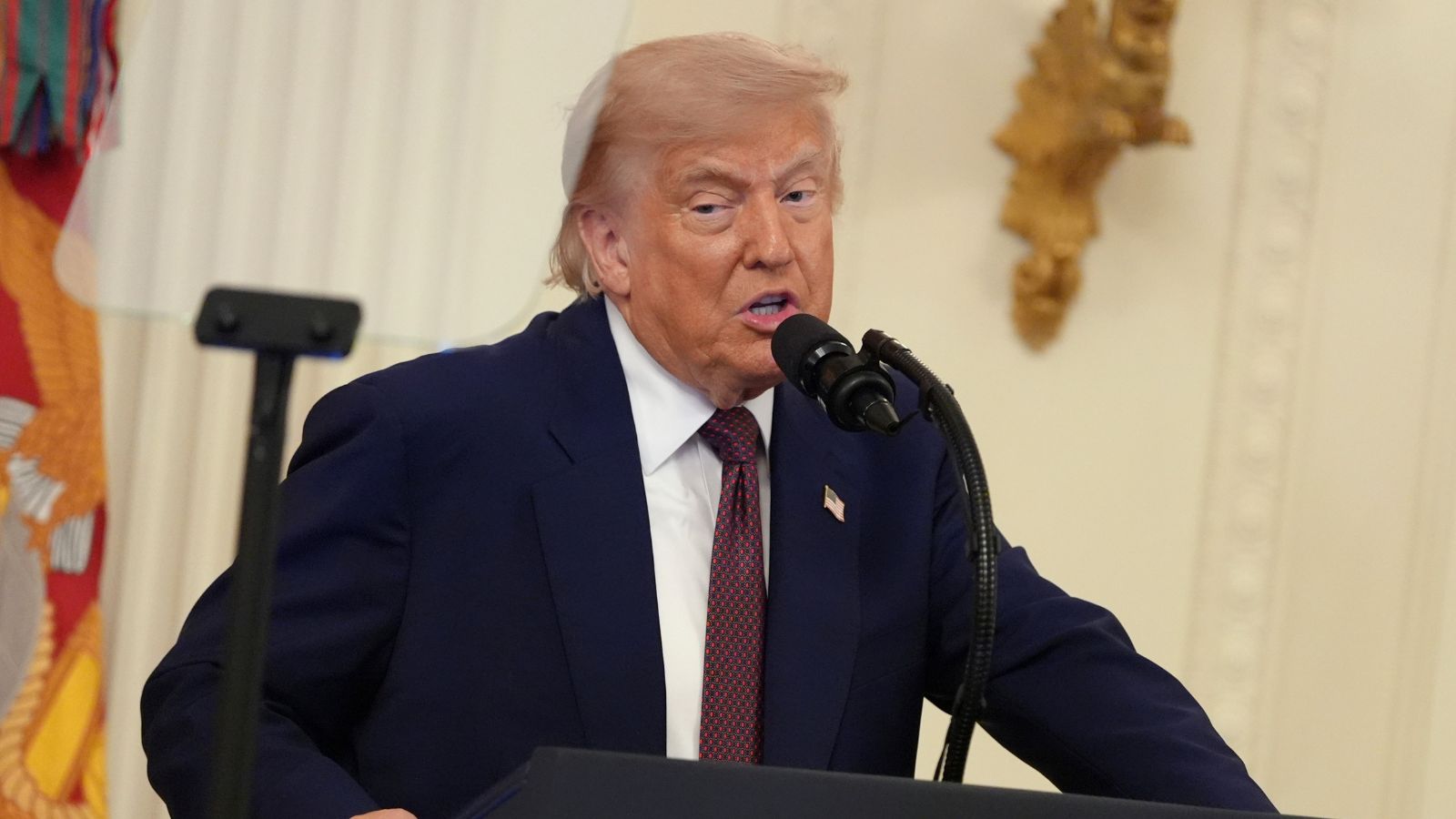
 US President Donald Trump in the East Room of the White House. (Photo: AP)
 US President Donald Trump pushed through a hurried, late-night signing of his agreement with Iran at Versailles last week jumping ahead of a planned ceremony in Switzerland because he wanted the deal to take effect immediately.
A surprise demand at dinner
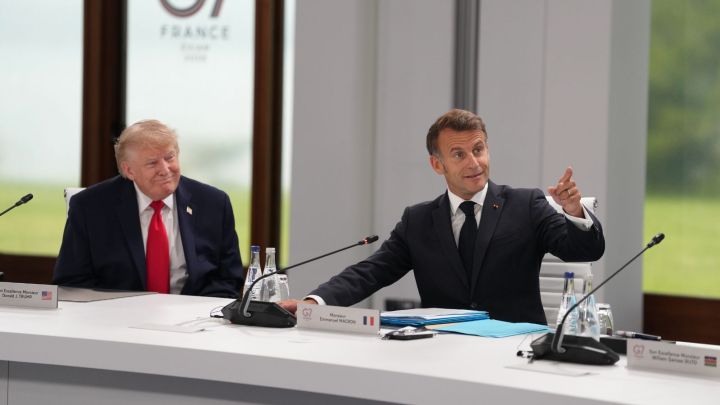
Trump was about to sit down for dinner at the Versailles palace on 17 June when he told French President Emmanuel Macron and his own aides he wanted to sign the Iran agreement that same night, not at the scheduled event two days later in Lucerne. Macron quickly arranged it.

As the two leaders toured the palace, Secretary of State Marco Rubio worked with French officials to print the document. Trump signed it just past 1 a.m. local time, calling out to reporters that the deal was done.
The Lucerne signing never happened. Vice President JD Vance, the lead US negotiator, postponed his trip after Iran pulled out over renewed fighting between Israel and Hezbollah in Lebanon.
Why the rush
Trump’s team had been looking for a way out of the war for months. Officials worried that shrinking global oil reserves and rising economic strain were becoming political risks ahead of the midterm elections.
Story continues below this ad
Trump himself later said fears of an economic downturn and comparisons to Herbert Hoover, the US president remembered for the Great Depression pushed him to finalise the deal.
Criticism at home
The agreement has drawn backlash even from Trump’s own supporters. A $300 billion reconstruction fund for Iran, included in the deal, has been called more generous than the Obama-era nuclear agreement Trump once opposed. Trump pushed back, insisting Iran came to the table because of US military pressure, not American weakness.
A bumpy, secretive process
Talks were complicated by long delays in reaching Iran’s Supreme Leader, who US officials believe moves locations frequently for security reasons. A mid-air collision between a US helicopter and an Iranian drone in early June triggered a fresh round of strikes and counter-strikes before Qatari mediators helped narrow the gap between both sides.
Tensions flared again after an Israeli strike on Beirut on Trump’s birthday weekend, which the US side suspected was an attempt by Israel to derail the deal. Iran nearly retaliated with ballistic missiles before Qatari negotiators talked both sides down after 17 hours of discussions. Iran’s only firm condition: the deal could not be announced on Trump’s birthday. It was instead unveiled just after midnight in Tehran.
Story continues below this ad
Even after signing, the full text of the 14-point agreement stayed private for days, partly at Iran’s request.
Officials have since described additional “understandings” that exist outside the written document a detail Vance brushed off, saying verification matters more than the precise wording.
The deal sets a 60-day window for technical talks aimed at curbing Iran’s nuclear programme, with Vance, special envoy Steve Witkoff and Trump’s son-in-law Jared Kushner leading the US side. Senior officials, including CIA Director John Ratcliffe and Defense Secretary Pete Hegseth, are reported to be among the most doubtful that Iran will follow through.
(With inputs from CNN)